You can listen to ham radio without a license in receive-only mode; transmitting on amateur frequencies requires the appropriate authorization. Ham radio mobile mounting solutions become useful when you want stronger reception and hands-free controls in a vehicle, while a handheld remains the simplest way to discover local activity.
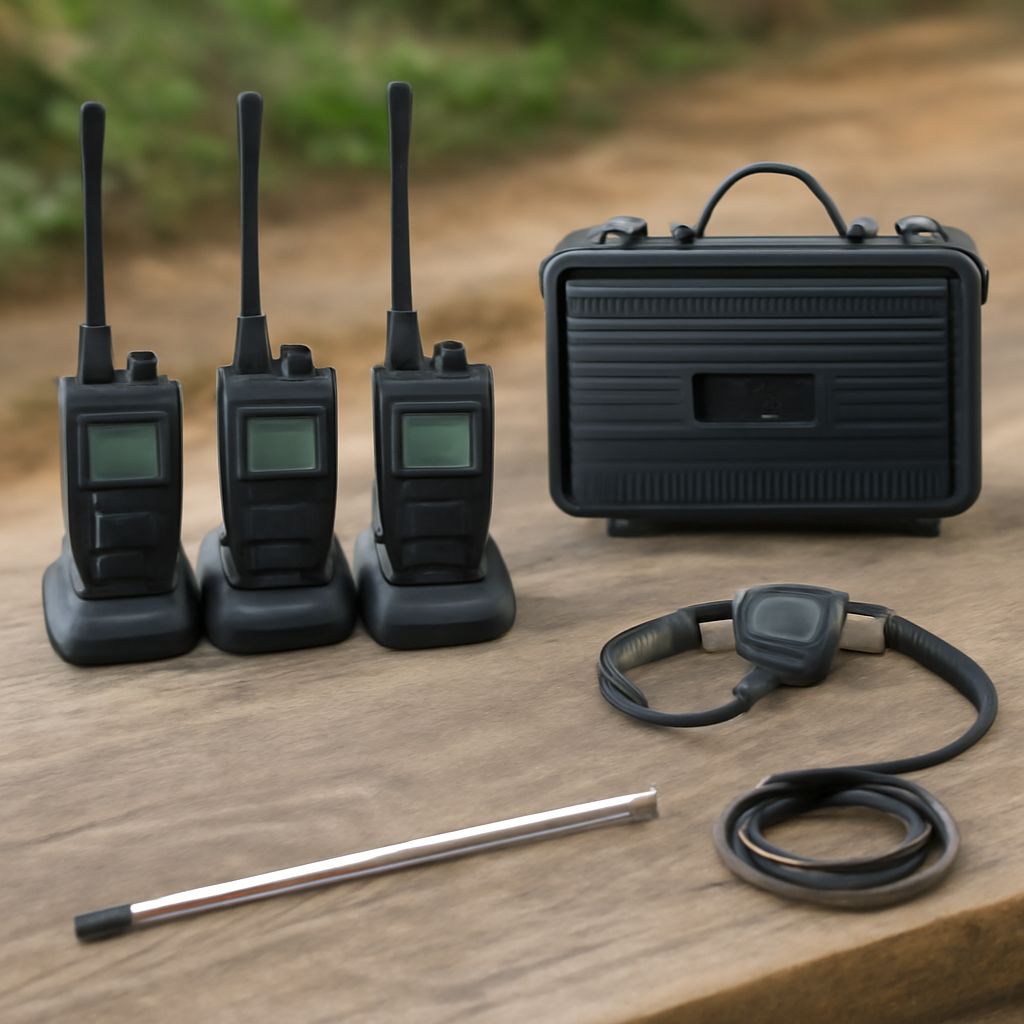
Start with a dual-band handheld that receives 2-meter VHF and 70-centimeter UHF signals. Use it to identify repeaters, listen to local nets, and learn which bands and modes are active before deciding whether you need a permanently installed mobile radio.
Can you listen to ham radio without a license?
In the United States, receive-only monitoring of amateur frequencies generally does not require an amateur radio license. Listening capability and transmitting authorization are separate: a radio may receive a signal even when you are not permitted to press its push-to-talk button.
Most beginner activity is found on the 2-meter band, approximately 144–148 MHz, and the 70-centimeter band, approximately 420–450 MHz. Analog FM is common for local voice conversations and repeaters. Depending on the radio, you may also encounter digital modes such as DMR, D-STAR, or System Fusion, but a basic analog handheld will not decode them.
Use the radio’s scan function to check programmed memories or a selected frequency range. Scanning can stop on a conversation, repeater identification, weather broadcast, or burst of data. Do not transmit accidentally while exploring: keep the radio in receive mode, avoid the push-to-talk control, and do not assume that hearing a channel means you may legally use it.
How do you find active local frequencies and repeaters?
Begin with a repeater directory such as RepeaterBook, the ARRL repeater listings, or a local amateur radio club’s published guide. Search by town or grid location, then record the repeater’s output frequency, input offset, access tone, band, and mode. The output is the frequency you normally monitor; the offset tells the radio where a licensed operator’s transmission is sent.
Program nearby entries into memory channels with descriptive names. For analog FM, confirm whether the repeater requires a CTCSS or “PL” tone. Without the correct tone, you may hear activity but fail to access the repeater once licensed. Scan the local memory bank at different times of day because commuter traffic, emergency-service support events, and scheduled nets follow different patterns.
A club meeting calendar or net schedule can reveal activity that a directory cannot. If every channel is silent, check the antenna connection, selected mode, tone settings, and scan-delay behavior before assuming the area has no operators.
What is the best handheld ham radio for beginners?
For most beginners, the Yaesu FT-65R is a strong first choice for straightforward 2-meter and 70-centimeter FM monitoring and local repeater use. The Icom IC-T10 is another simple dual-band option. If you specifically want APRS and digital networking, the more advanced Kenwood TH-D75 adds those capabilities at a substantially higher price.
Choose a handheld by comparing these practical features:
- Reception: Dual-band coverage, a useful scan function, signal-strength display, and programmable memory channels make local discovery easier.
- Controls: A readable screen, direct frequency entry, adjustable squelch, and easy tone programming reduce frustration.
- Battery: A removable lithium-ion pack, charging cradle, spare battery, and USB-compatible charging options are valuable for extended listening.
- Antenna: The supplied rubber antenna is portable, but an elevated or vehicle-mounted antenna can improve reception considerably.
Handhelds typically provide about 1–5 watts and are easy to carry, but their small battery and short antenna limit range. Higher power alone does not solve those limitations; antenna height and efficiency often matter more.
Ham radio mobile mounting solutions for a secure vehicle setup
A mobile radio is the better step when you regularly drive, need dependable coverage, or want to use an external antenna. A unit such as the Icom IC-2730A or Yaesu FTM-6000R commonly provides 25–50 watts, draws power from the vehicle rather than a small battery, and works with a more effective roof or fender antenna. A mobile radio is less portable and needs careful installation, but its controls and microphone are easier to use from the driver’s seat.
Plan each mounting point before drilling or routing cable:
- Radio body: Secure it under the dash, in the center console, or beneath a seat only where the bracket is rigid, ventilation remains open, and the unit cannot interfere with pedals, passengers, or airbags.
- Control head: Place a detachable control head on the dash or console where it is visible without blocking gauges, vents, shifter movement, or an airbag deployment path.
- Microphone: Mount the clip within easy reach, with enough slack for normal use. Keep the microphone cable away from the steering wheel, pedals, and other moving controls.
- Power cable: Run appropriately sized positive and negative leads to the battery or manufacturer-approved power point. Protect the positive lead with an inline fuse near the battery, use a firewall grommet, and keep cables away from heat and sharp edges.
- Antenna: A permanent NMO antenna centered on the roof usually provides the best ground plane and coverage. A hood, fender, or temporary magnetic mount can be easier, but secure the mount, protect the coax, and keep it clear of doors and moving hardware.