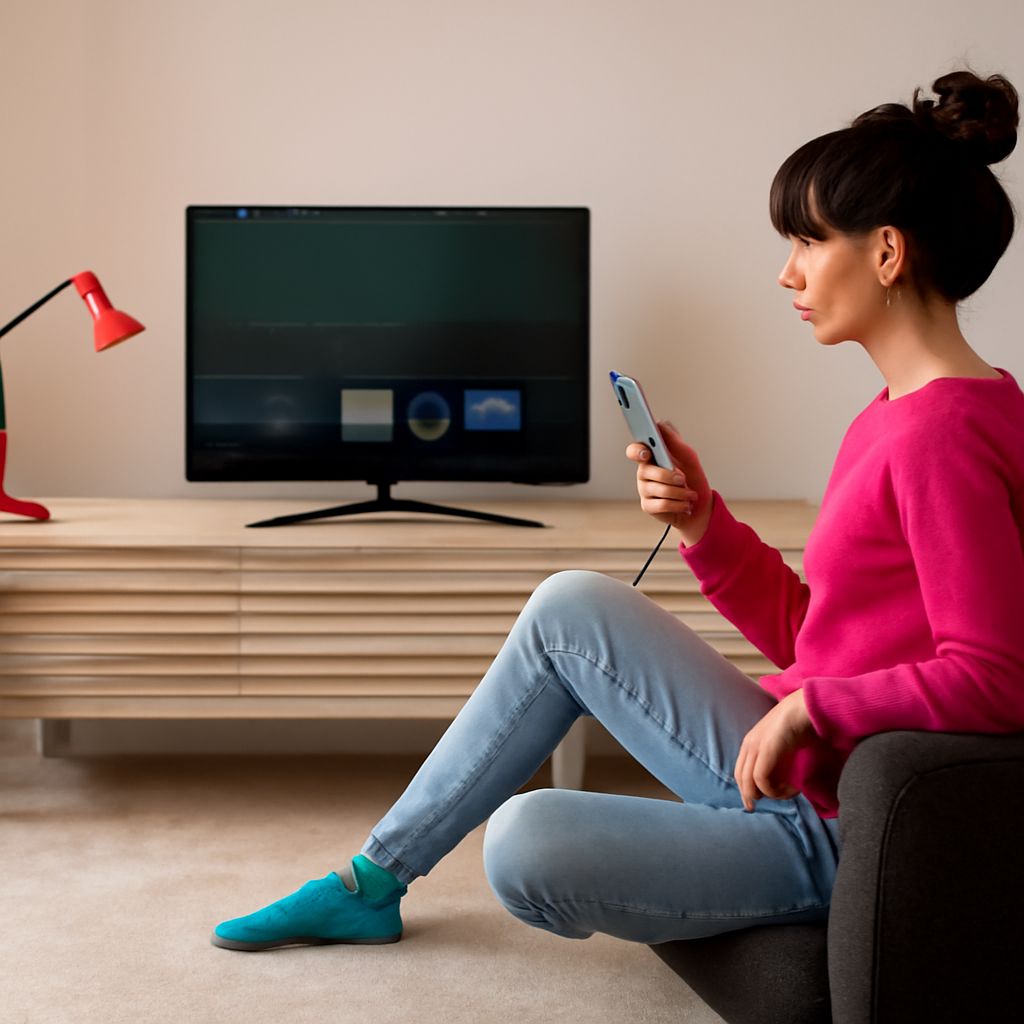
Connecting your phone to your TV with an HDMI cable provides one of the easiest and most reliable ways to enjoy your photos, videos, apps, and games on a larger screen. With the right adapter or cable, you can mirror your phone’s display or stream content directly for a seamless viewing experience. Below, you’ll find exactly what’s required, how to connect, troubleshooting tips for common problems, and other ways to hook up your phone to your TV if HDMI isn’t an option.
What Do You Need to Connect Your Phone to Your TV with HDMI?
To use HDMI phone to TV, you need a few key items depending on your device type:
- A TV with an HDMI port: Most HDTVs and 4K TVs from the last decade have at least one HDMI input.
- An HDMI cable: Standard HDMI cables work for most connections. Length does not affect quality under 10 meters for home use.
- A compatible adapter for your phone: The type of adapter you need depends on your phone’s charging port:
- For Android phones: Most recent Android smartphones use USB-C ports. You’ll need a USB-C to HDMI adapter or cable that supports video output (look for “Alt Mode” HDMI support).
- For iPhones: iPhones use a Lightning port. Apple’s Lightning Digital AV Adapter is the standard choice for connecting an iPhone to an HDMI cable.
- For older Android devices: Some feature a Micro USB port that supports MHL (Mobile High-Definition Link). You’ll need an MHL to HDMI adapter, but check if your phone supports MHL before buying.
- Power for the adapter (sometimes required): Some adapters, especially for iPhone and MHL, need to be powered via an additional USB cable plugged into a charger or your TV’s USB port.
Before purchasing any accessories, verify your phone model’s compatibility with HDMI output. Some budget or older phones may not support video-out, even if they have a USB-C port.
How Do You Connect Your Phone to Your TV Using HDMI?
To connect your phone to TV HDMI, follow these step-by-step instructions:
- Plug the adapter into your phone. For iPhones, insert the Lightning Digital AV Adapter; for USB-C Androids, connect your USB-C to HDMI cable or adapter. For MHL, attach the specific MHL adapter.
- Connect your HDMI cable. Attach one end of the HDMI cable to the adapter and the other end to an open HDMI port on your TV.
- Provide power to the adapter if required. Some adapters need external power—connect the USB port to a charger or the TV’s USB slot as instructed by your adapter’s manual.
- Switch your TV input. Use your TV remote to change the input/source to the HDMI port you used. Most TVs label their HDMI ports, such as “HDMI 1” or “HDMI 2.”
- Wait for your phone’s screen to appear. Your phone should automatically mirror its display to the TV. For video playback, some apps may provide additional output controls or options.
If you want optimal quality, ensure both your cable and adapter support at least 1080p (Full HD) video. If you’re playing copy-protected content (like certain streaming services), you may need official adapters to avoid errors or playback restrictions.
Audio should transmit automatically through HDMI. If you don’t hear sound, check your TV’s audio settings and make sure it isn’t muted or set to a different input.
What Should You Do If Your HDMI Phone to TV Connection Isn’t Working?
If your HDMI phone to TV setup isn’t functioning as expected, try these troubleshooting tips:
- Check all physical connections: Make sure the HDMI cable is securely plugged into both the TV and the adapter. The adapter should fit snugly into your phone’s port.
- Confirm TV input selection: Cycle through your TV’s input options. If you have multiple HDMI ports, test each one or verify which port the cable uses.
- Test with another HDMI cable or adapter: Faulty cables or adapters are common culprits. If possible, swap in a known-working cable or adapter to isolate the issue.
- Restart devices: Unplug your phone, TV, and adapter, then reconnect and reboot each device.
- Check device compatibility: Not all phones output HDMI video, especially some budget Android models. Search your device’s specs for “HDMI output,” “video out,” or “Alt Mode.”
- Update your phone’s software: An outdated OS can cause connection problems. Make sure your phone is running the latest version supported by the manufacturer.
- Inspect power supply: Some adapters and setups require external power. If your adapter has a port for charging, be sure it’s connected to a power source.
If your device still doesn’t connect, consult the manufacturer’s support or look for model-specific guides. Some streaming apps may block HDMI output due to copyright protections, so test with local media (like your photos or downloaded videos) to rule out app-specific issues.
Are There Alternatives to HDMI for Connecting Your Phone to Your TV?
If you can’t use HDMI, several wireless and wired alternatives exist for connecting your phone to your TV:
- Wireless screen mirroring: Most smart TVs support protocols like Miracast or Apple AirPlay. For Android, use “Cast” or “Screen Mirroring” from your phone’s settings. For iPhone, use AirPlay to compatible devices like Apple TV or some smart TVs.
- Streaming devices: External devices such as Chromecast, Roku, Amazon Fire TV Stick, and Apple TV allow you to cast or mirror your phone’s display wirelessly and often support higher resolutions and better app integration.
- USB-C to DisplayPort or VGA: Some Android phones support video out through USB-C to DisplayPort or VGA adapters, which are useful for connecting to computer monitors or older TVs.
- DLNA and third-party apps: Apps like Plex and VLC can stream media files from your phone to your TV over a shared Wi-Fi network if your TV supports DLNA or has the app installed.
While HDMI is the most reliable and straightforward way to physically connect phone to TV HDMI, alternatives can offer more convenience or suit different setups. Always check your TV’s input options and your phone’s supported output modes for the smoothest experience.