Building grip strength is crucial for athletes, weightlifters, climbers, and anyone seeking better hand endurance or dexterity. The right grip strength equipment and a consistent hand gripper workout routine can dramatically improve your performance and support daily functional tasks. This guide covers the essential tools, explains how to use hand grippers effectively, highlights top exercises, and provides tips for measuring progress while avoiding common pitfalls.
What types of grip strength equipment are available?
Grip strength equipment comes in several forms, each targeting different aspects of hand and forearm development. The most common tools include hand grippers, grip balls, pinch blocks, wrist rollers, and fat grip adapters. Understanding these options helps you choose gear that matches your needs and training goals.
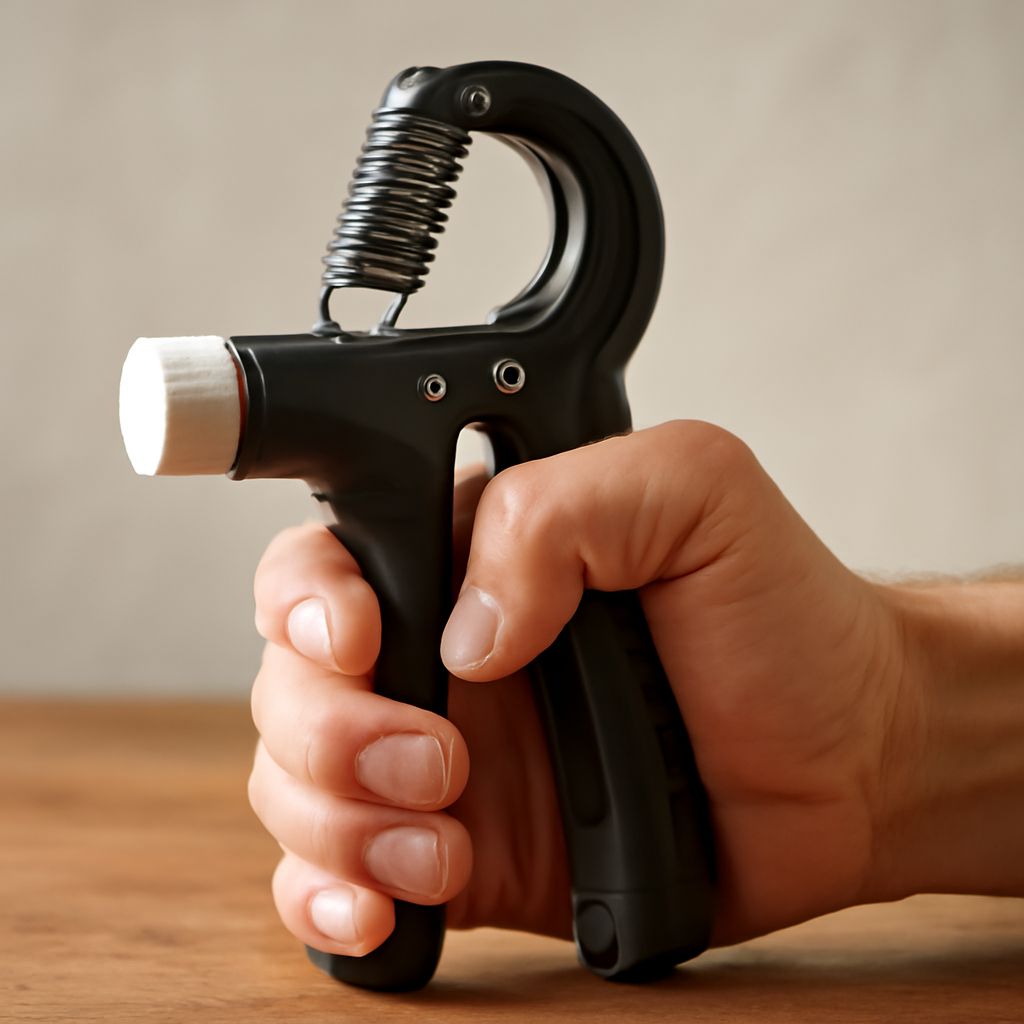
Hand grippers are spring-loaded devices specifically designed for crushing grip strength. Popular brands like Captains of Crush, IronMind, and Heavy Grips offer grippers in a range of resistances, letting users progress over time. Adjustable hand grippers can fine-tune resistance, making them suitable for rehabilitation or progressive overload.
Grip balls and eggs provide a dynamic way to improve both grip and finger strength. These squeezable devices come in different densities and sizes. They are ideal for stress relief, rehab, and targeting muscles that standard grippers may not fully engage.
Pinch blocks and plates focus on pinch grip strength, requiring you to hold a weight by pinching it between your thumb and fingers. This is especially valuable for climbers and athletes who rely on finger dexterity. Brands like Rogue Fitness and Sorinex offer pinch tools designed for incremental loading.
Wrist rollers are rods with a suspended weight, used to strengthen the forearm through repetitive rolling motions. They target both flexor and extensor muscles and can be loaded with plates for progressive training.
Fat grip adapters such as Fat Gripz or Grip4orce slip over barbells, dumbbells, or pull-up bars to increase handle thickness. This forces your hand and forearm muscles to work harder during regular lifts, promoting balanced grip development across compound movements.
How do you use hand grippers for an effective workout?
A successful hand gripper workout relies on proper technique, the right rep schemes, and consistent progression. Start by choosing a gripper with a resistance level you can close for about 8–12 repetitions. If you are new to grip training, begin with a light or medium tension to master form before advancing.
Warm-up your hands and forearms with light dynamic stretches and a few easy squeezes. Hold the gripper in your dominant hand with the handles resting low in your palm. Position the handle base just above your thumb pad, ensuring your fingers wrap securely around the opposite handle. Squeeze the handles together smoothly until they touch, then release with control. Avoid using your wrist or body for leverage—focus the force through your hand muscles.
For a balanced hand gripper workout, perform 2–4 sets of 8–15 reps per hand, resting 60–90 seconds between sets. As you build endurance, include static holds—close the gripper and hold the contraction for 3–5 seconds per rep. To increase strength, gradually progress to a gripper with more resistance or add negatives by closing the gripper with both hands and lowering it slowly with one.
Alternate hands and train both equally to prevent imbalances. If your goal is maximal strength, use heavier grippers for low reps (3–5), focusing on quality over quantity. For muscle endurance or recovery, use lighter grippers for higher reps (15–20) or extended holds.
Which grip strength exercises deliver the best results?
While hand grippers are highly effective, integrating a variety of grip strength exercises yields faster and more balanced improvement. The key is to challenge different grip types: crushing, pinching, and supporting.
Crushing grip exercises revolve around squeezing objects, such as using hand grippers, grip balls, or thick bars. This targets the muscles responsible for closing the hand. A simple routine might include sets with hand grippers, followed by static barbell holds for time using fat grip adapters.
Pinch grip exercises develop finger and thumb strength. Try plate pinches by holding two weight plates together smooth-side out, pinched between your thumb and fingers for up to 30 seconds. Pinch blocks or specialized implements offer greater loading potential for advanced users.
Supporting grip exercises focus on maintaining a hold on heavy objects for extended periods. Farmer’s walks, where you walk while carrying heavy dumbbells or kettlebells, reinforce grip endurance and core stability. Dead hangs from a pull-up bar are another effective supporting grip challenge. For added intensity, use a towel or fat grips to thicken the bar.
Mix these exercises throughout your weekly routine, aiming for 2–3 dedicated grip sessions per week. Vary grip surfaces, loads, and holds to avoid plateaus and fully develop forearm and hand strength.
How can you track progress and avoid common mistakes?
Consistent progress in grip strength training comes from tracking your improvements and steering clear of frequent errors. Begin by recording key metrics: the resistance level of your hand grippers, maximum reps or hold times, and weight held during supporting or pinch exercises. Set clear short-term and long-term goals, such as closing a new gripper size or increasing your farmer’s walk distance.
Test your grip strength every few weeks. Common methods include counting the maximum reps you can perform with a particular hand gripper, timing your plate pinch holds, or measuring your dead hang duration. Some athletes also use digital grip dynamometers for precise force readings.
Avoid overtraining by allowing adequate rest between grip sessions. The small muscles of the hands and forearms recover more slowly than larger muscle groups. Watch for signs of fatigue, pain, or swelling, and reduce frequency or intensity if necessary. Prioritize recovery techniques such as stretching, gentle massage, and contrast baths.
Other common mistakes include neglecting opposing muscles (extensors), using poor technique, or favoring one hand. Balance your routine with reverse curls, rubber band finger extensions, and ambidextrous training. With patience, tracking, and variety, your grip strength will steadily advance and positively impact your broader training goals.