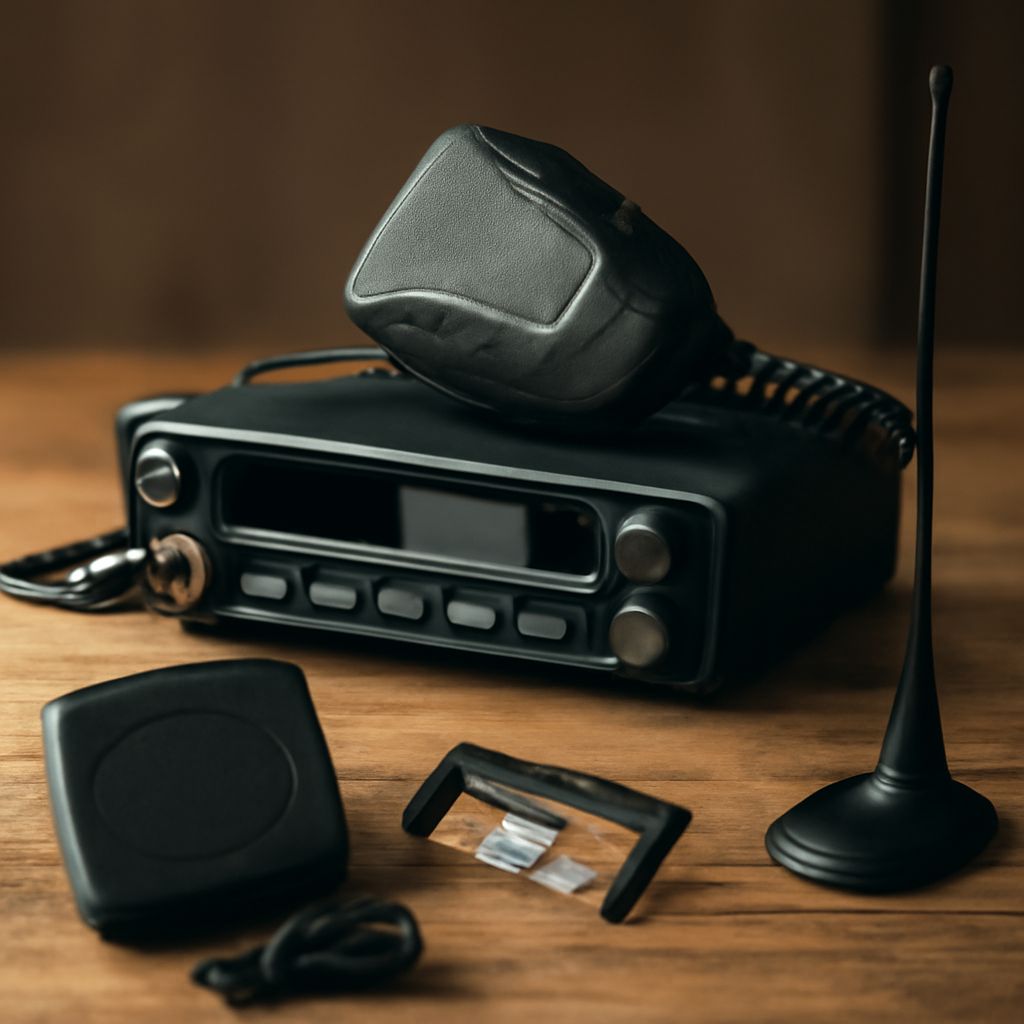
The CB radio channel 19 frequency is 27.185 MHz (27,185 kHz), the standard operating frequency for Citizens Band channel 19 in the United States and many other regions using the same plan. It sits in the 11-meter CB allocation, where channel 19 is widely used for highway traffic reports, road conditions, and general trucker communication. It is a CB reference, not an amateur or ham frequency.
A ham radio frequency range is not one adjacent block like the CB band. Amateur radio uses multiple separated allocations—known as ham radio frequency bands—from low-frequency shortwave through VHF and UHF.
CB Radio Channel 19 Frequency: 27.185 MHz and Its Context
Channel 19 is centered on 27.185 MHz. In everyday CB use, it is the familiar highway channel, especially among truck drivers and other mobile operators. The frequency is commonly associated with AM voice, although CB rules may also permit specified sideband modes depending on the country and radio configuration.
Channel 19 is near the middle of the 40-channel CB plan. Its immediate neighboring assignments are channel 18 at 27.175 MHz and channel 20 at 27.205 MHz. Selecting channel 19 on a CB radio means selecting the fixed CB frequency of 27.185 MHz; it does not select an amateur-radio band.
How Does the CB Channel Plan Work From 26.965 to 27.405 MHz?
The standard 40-channel CB band extends from 26.965 MHz on channel 1 to 27.405 MHz on channel 40. Each channel number corresponds to a specific assigned frequency, so CB users normally choose a channel rather than freely tuning across the entire allocation.
Most CB assignments follow 10 kHz spacing, but the plan includes historical gaps and a numbering irregularity around channels 23 and 24. For practical use, the channel number and the frequency must be treated as a matched pair. A quick reference is:
- Channel 1: 26.965 MHz
- Channel 9: 27.065 MHz
- Channel 19: 27.185 MHz
- Channel 40: 27.405 MHz
This channelized structure makes CB equipment straightforward: a CB radio is designed for the 27 MHz service and its assigned channels. It should not be confused with an amateur transceiver, which is built to tune and operate within one or more licensed amateur allocations.
What Is the Ham Radio Frequency Range? A Band-by-Band Map
There is no single ham frequency. The following is a representative overview of major United States amateur allocations. Exact edges, operating privileges, and permitted modes can vary by country, license class, and sub-band plan.
- 160 meters: 1.800–2.000 MHz
- 80 meters: 3.500–4.000 MHz
- 60 meters: five designated channels centered at 5.3305, 5.3465, 5.3570, 5.3715, and 5.4035 MHz; this is not a continuous band in the same way as most others
- 40 meters: 7.000–7.300 MHz
- 30 meters: 10.100–10.150 MHz
- 20 meters: 14.000–14.350 MHz
- 17 meters: 18.068–18.168 MHz
- 15 meters: 21.000–21.450 MHz
- 12 meters: 24.890–24.990 MHz
- 10 meters: 28.000–29.700 MHz
- 6 meters: 50–54 MHz
- 2 meters: 144–148 MHz
- 70 centimeters: 420–450 MHz
The meter labels are approximate wavelength descriptions. The lower-frequency bands, such as 160, 80, and 40 meters, are generally associated with longer-distance propagation under suitable conditions. The 2-meter and 70-centimeter bands are widely used for local voice, repeaters, digital communication, and other VHF or UHF applications.
What Are the Main Ham Radio Frequency Bands? Why the Ranges Stay Separate
Amateur bands remain separated because radio behavior changes substantially with frequency. Lower frequencies require larger antennas and can support different long-distance propagation patterns. Higher frequencies allow smaller antennas and are often useful for local, line-of-sight, satellite, repeater, or specialized digital work. Separate allocations also help regulators coordinate amateur operations with broadcasters, aviation, government users, satellites, and other radio services.
Unlike CB, amateur radio is organized around band allocations, not simply a short list of numbered voice channels. Within an amateur band, operators may select frequencies according to the permitted mode, emission type, regional band plan, license privileges, and local activity. Some segments are better suited to voice, while others are commonly used for CW, digital modes, beacons, satellites, or weak-signal work.
When reading a frequency chart, first identify the service heading. A listing under CB should show the 26.965–27.405 MHz channel plan, including channel 19 at 27.185 MHz. A listing under amateur radio will instead show separate bands such as 7.000–7.300 MHz or 144–148 MHz. Equipment coverage alone does not merge these services: a CB radio is built for CB operation, while an amateur transceiver and antenna system are designed around specific ham bands and their operating requirements.