Butterfly needles, often recognized for their flexibility and ease of use, have become an essential tool in medical procedures requiring venous access. Named for their winged appearance, they provide a gentler option for blood draws and intravenous (IV) therapy, especially in patients with small or delicate veins. This article explores what a butterfly needle is, how to choose the right butterfly needle gauge, and their applications in various medical settings.
What is a Butterfly Needle?
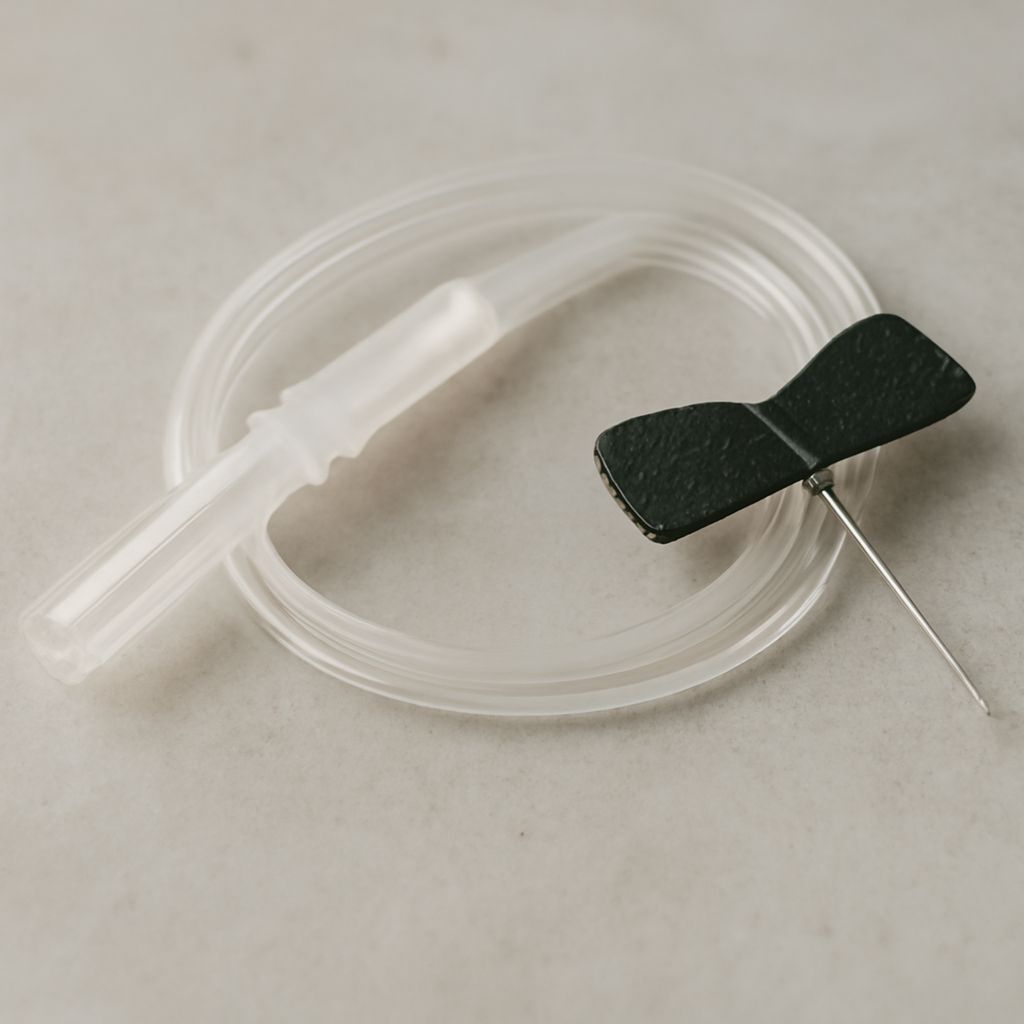
A butterfly needle, also known as a winged infusion set, is a device used to access a vein for drawing blood or administering medication. Its design features two flexible “wings” on either side of a hollow needle, which allows for greater control during insertion. The needle is attached to a thin, plastic tubing that facilitates the transfer of fluids.
The flexibility and precision offered by the butterfly needle make it particularly suitable for patients with small or fragile veins, such as children and the elderly. The wings provide a stable grip, enabling healthcare professionals to position the needle accurately and reduce the risk of vein damage or patient discomfort.
How to Choose the Right Butterfly Needle Gauge
Choosing the appropriate butterfly needle gauge is crucial for ensuring effective venous access and minimizing discomfort. The gauge of a needle refers to its diameter, with smaller numbers indicating larger needles. For instance, a 21-gauge needle is larger than a 25-gauge needle.
- 21-23 Gauge: These are commonly used for drawing blood in adult patients. They provide a good balance between size and comfort, allowing for efficient blood flow while minimizing patient discomfort.
- 23-25 Gauge: These smaller gauges are ideal for pediatric patients or adults with difficult veins. They are less likely to cause trauma or bruising, making them suitable for delicate venous access.
When selecting a butterfly needle gauge, consider the patient’s vein size, the purpose of the procedure, and the need for patient comfort. Healthcare professionals should weigh these factors to determine the best option for each individual case.
Uses of Butterfly Needles in IV and Blood Draws
Butterfly needles are versatile tools used in various medical procedures, primarily for blood draws and IV therapy. Their applications include:
- Blood Draws: The butterfly needle is ideal for blood draws in patients with small or difficult veins. Its design allows for precise insertion and reduces the risk of vein collapse or patient discomfort. This makes it a preferred choice in pediatric and geriatric care.
- IV Therapy: Butterfly needles are used for short-term IV therapy, such as administering medications or fluids. Their ease of insertion and gentle nature make them suitable for patients with sensitive veins. However, they are not recommended for long-term IV use due to their higher risk of dislodgment.
- Blood Collection for Tests: In laboratory settings, butterfly needles are often used for collecting blood samples for tests. Their accuracy and reduced risk of hemolysis ensure the integrity of blood samples, providing reliable results.
In conclusion, butterfly needles are invaluable in medical procedures requiring venous access. Understanding their design, choosing the appropriate butterfly needle gauge, and recognizing their applications in blood draws and IV therapy can significantly enhance patient care and procedural efficiency.