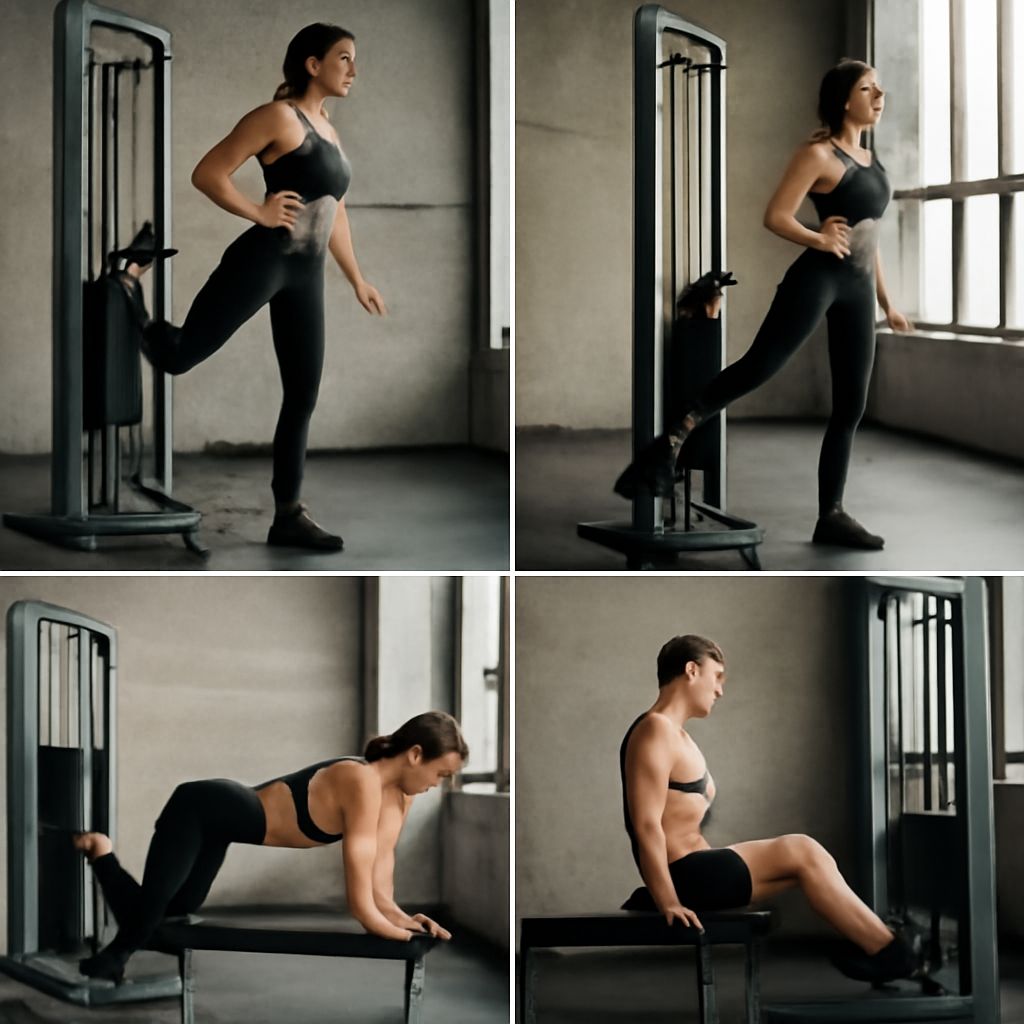
Cable machines provide a versatile, joint-friendly way to target every major muscle group in your lower body. By offering constant resistance throughout each exercise, cable leg exercises challenge your muscles in ways that free weights and machines can’t always replicate. Whether your goal is strength, balance, or muscle definition, the right cable leg workout can help you see progress while reducing the risk of strain or injury.
What Are the Most Effective Cable Leg Exercises?
Some of the most effective cable leg exercises leverage the unique resistance profile of cable machines for functional strength and muscle activation. Here are the top movements for building strong, stable legs:
- Cable Squats: Stand facing the cable machine with the pulley set at a low position and hold the handle with both hands. Squat down, keeping your chest up and knees tracking over your toes, then return to standing. The cable provides continuous tension, especially at the top of the movement.
- Cable Romanian Deadlifts: Attach a straight bar to the low cable. Stand with feet hip-width apart, grasp the bar, and hinge at your hips while keeping your back flat. Lower the bar until you feel a stretch in your hamstrings, then drive your hips forward to return to standing. This targets the hamstrings and glutes while minimizing back strain.
- Cable Kickbacks: Attach an ankle strap to your lower leg and face the machine. Keeping your core braced, kick your leg back and up, squeezing your glute at the top. This isolates the glutes and is excellent for muscle activation without heavy loads.
- Cable Lateral Lunges: Hold a single handle in both hands with the cable at a low setting. Step out to the side into a deep lunge, then push back to center. This move targets the inner and outer thighs and promotes lateral stability.
- Cable Standing Leg Curls: With an ankle strap, face away from the machine and curl your heel toward your glute. The cable’s tension maximizes hamstring engagement while challenging your balance.
- Cable Hip Abductions: Stand side-on to the machine with the ankle strap attached. Raise your leg out to the side, focusing on the outer glute. This is excellent for hip stability and injury prevention.
By combining these cable leg exercises, you can build a comprehensive workout that hits all the major leg muscles while keeping your joints safe and building functional strength.
How Can You Structure a Cable Leg Workout for Maximum Results?
Structuring your cable leg workout effectively ensures you hit every muscle group and avoid plateaus. A balanced session should include exercises that target your quads, hamstrings, glutes, and hip stabilizers while challenging your balance and stability.
A sample cable leg workout could look like this:
- Cable Squats: 3 sets of 10-12 reps
- Cable Romanian Deadlifts: 3 sets of 10-12 reps
- Cable Kickbacks: 3 sets of 12-15 reps per leg
- Cable Lateral Lunges: 3 sets of 10 reps per side
- Cable Standing Leg Curls: 3 sets of 12 reps per leg
- Cable Hip Abductions: 3 sets of 15 reps per leg
Rest for 60–90 seconds between sets and focus on slow, controlled movements. If you’re a beginner, start with lighter weight and higher reps to master the form. Advanced lifters can increase resistance and add supersets (pairing two exercises back-to-back) to increase intensity. Rotate your cable leg workout every 4–6 weeks to keep challenging your muscles and avoid adaptation.
To further maximize results, combine cable-based moves with bodyweight or dumbbell exercises, such as step-ups or split squats, for a well-rounded routine. Remember to warm up with dynamic stretches and activate the hips and glutes before your main sets.
What Tips Ensure Proper Form and Safety During Cable Leg Workouts?
Proper form is crucial in any cable leg workout to maximize gains and prevent injury. Here are actionable tips for safe and effective training:
- Start with a full-body warm-up: Five to ten minutes of light cardio (cycling, brisk walking) and dynamic stretches prepare your body and joints for the session ahead.
- Adjust the cable settings: Make sure the pulley height matches the exercise. For squats and deadlifts, use a low setting; for standing curls or hip abductions, adjust accordingly.
- Engage your core: Keep your core braced throughout each movement to protect your spine and maintain balance, especially during single-leg or lateral moves.
- Use a moderate weight: Select a load that allows you to complete all reps with good form, but still feels challenging for the last few reps. Avoid going too heavy, which can compromise technique and increase injury risk.
- Control the tempo: Move slowly, especially on the eccentric (lowering) phase, to maximize muscle engagement and protect your joints.
- Monitor alignment: Knees should track over toes, back remains neutral, and shoulders stay relaxed. Avoid locking out your knees at the top of movements.
- Breathe intentionally: Exhale on the effort (e.g., rising from a squat or kicking back) and inhale on the return phase.
Always finish with gentle stretching to aid recovery and improve flexibility in the major leg muscles worked.
Why Choose Cable Machines for Leg Training?
Cable machines offer unique advantages for leg training compared to free weights and fixed-range machines. The constant tension through the entire range of motion activates more muscle fibers, enhancing both muscle growth and joint stability. Cables also allow for a high degree of customization—you can adjust resistance, direction, and the angle of movement quickly, adapting each exercise to your specific needs and fitness level.
This versatility makes cable leg exercises ideal for people rehabbing injuries, athletes training for performance, or anyone looking to break through a plateau. Cables also enable isolation of smaller stabilizing muscles that contribute to balance and injury prevention, something traditional barbells may not effectively target.
Incorporating cable leg workouts into your routine can enhance mind-muscle connection, support better movement patterns, and make leg day more dynamic and engaging. Whether you’re after power, stability, or sculpted legs, cable training can be the missing link in your lower-body program.