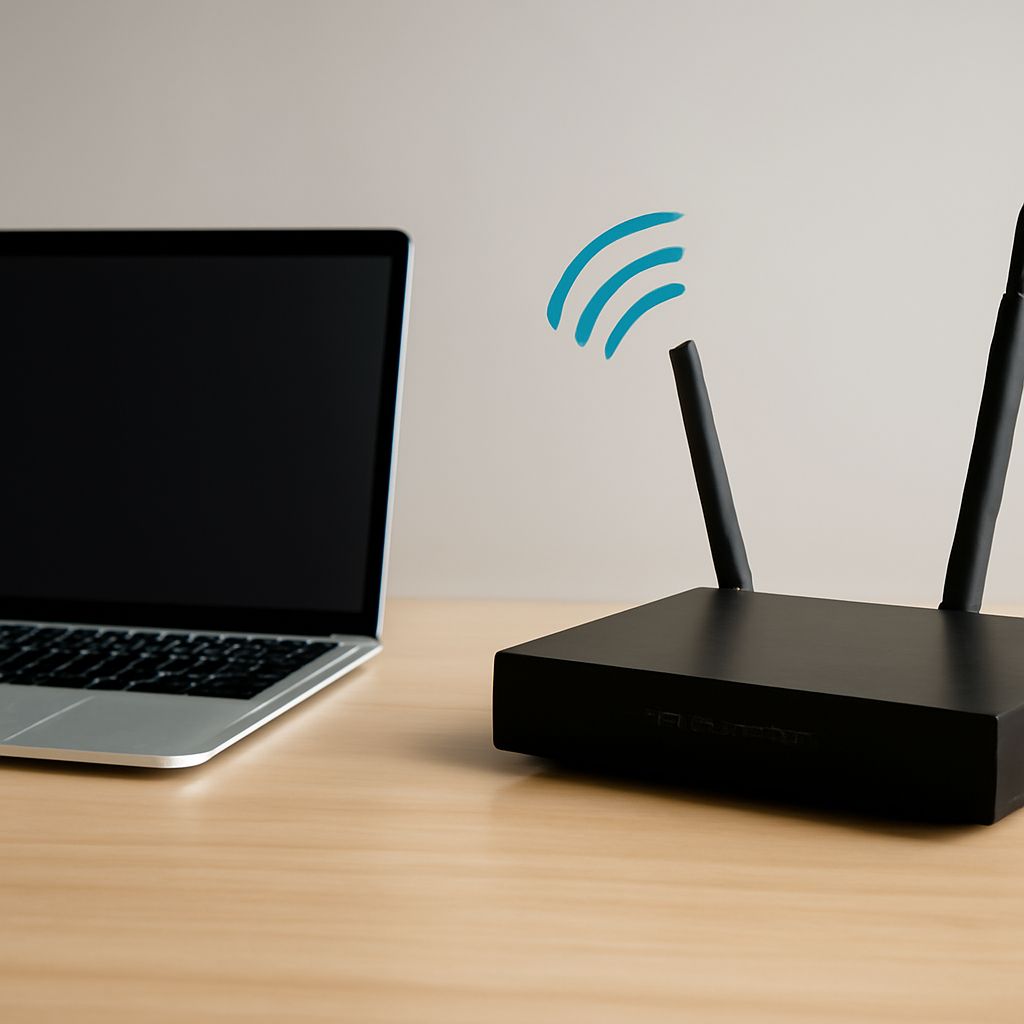
A homemade TV antenna can receive local channels when its elements match the stations’ actual RF bands. Build a simple dipole or bowtie, connect it to short RG6 coax, then improve reception by changing height, direction, placement, and amplification one variable at a time.
Before cutting wire, identify each station’s real RF channel and compass direction. A virtual channel 5, for example, may transmit on UHF RF channel 33. The RF channel determines the antenna dimensions; the transmitter bearing determines where you aim it.
How to Make a Homemade TV Antenna: Design, Materials, and Connection
For a basic antenna, gather two stiff copper wires, a piece of wood or thick cardboard, 75-ohm RG6 coaxial cable, electrical tape, and screws or cable ties. Use an outdoor-rated balun if your antenna has a 300-ohm twin-lead connection.
- Find the center frequency of the target RF channel in megahertz.
- Calculate the total length of a half-wave dipole with 468 ÷ frequency in MHz, giving the result in feet. Each leg is half that length.
- Cut two equal wire legs, strip about 1 inch of insulation, and attach one leg to the coax center conductor and the other to the braided shield. Keep the two connections separated.
- Mount the legs in a straight line for VHF or bend them into a shallow V for UHF. Secure the feed point to the support and weatherproof every outdoor connection.
For example, a 195 MHz VHF-high signal needs a dipole about 28.8 inches long, with legs about 14.4 inches each. A 575 MHz UHF signal needs a total length of about 9.8 inches, with legs about 4.9 inches each. Keep the antenna clear of metal, and do not let the shield touch the center conductor.
Match the Antenna Design to Your Local VHF and UHF Channels
U.S. over-the-air broadcasts occupy three practical ranges: VHF-low channels 2–6, roughly 54–88 MHz; VHF-high channels 7–13, roughly 174–216 MHz; and UHF channels 14–36, roughly 470–608 MHz after the broadcast repack.
Most small homemade bowties work best on UHF. They may perform poorly on VHF because VHF elements must be much longer. If your channel list includes VHF-high stations, add a correctly sized VHF dipole. For VHF-low, expect elements several feet long and consider whether an indoor build has enough space.
When local stations use different bands, use separate VHF and UHF elements connected through a VHF/UHF combiner rather than assuming one short antenna covers everything. An amplifier cannot make an antenna receive a band its elements do not cover.
How to Boost a TV Antenna with Height, Aiming, and Placement
Start indoors near a window facing the transmitters, then move the antenna higher. A higher outdoor location usually has fewer obstructions and a clearer line of sight, but trees, hills, walls, foil-backed insulation, and nearby buildings can block or reflect signals.
A dipole receives most strongly broadside to its wire, so point the wire’s broad face toward the transmitter. A bowtie’s broad face should also face the station. Use a compass bearing from a local station map, but make small rotations during testing. If stations lie in different directions, aim between them or use the position that gives the most reliable combined result.
Multipath occurs when reflected signals arrive out of phase. If reception changes sharply when the antenna moves only a few feet, try a different window, rotate the antenna slightly, or move it away from metal and electronics. Height is not always the winner; a lower position with fewer reflections can be more reliable.
How to Boost Your TV Antenna’s Signal Strength with One-Change-at-a-Time Tests
Use the television’s signal diagnostic screen, if available, and record both signal strength and signal quality. Quality and dropouts matter more than a high strength number.
- Make a baseline with the antenna in its current position, the shortest practical coax, and no splitter or amplifier. Check every expected channel for 30–60 seconds.
- Record each channel’s strength, quality, picture freezes, and audio cuts. Test channels individually because a change can help one station while harming another.
- Change only one variable: raise the antenna, rotate it 10–20 degrees, move it to another window, or replace a damaged cable. Wait briefly, then repeat the same channel-by-channel test.
- Keep the change only if it improves reliability across the channels you need. If one position helps UHF but hurts VHF, use the band-specific element or compromise position that meets your viewing needs.
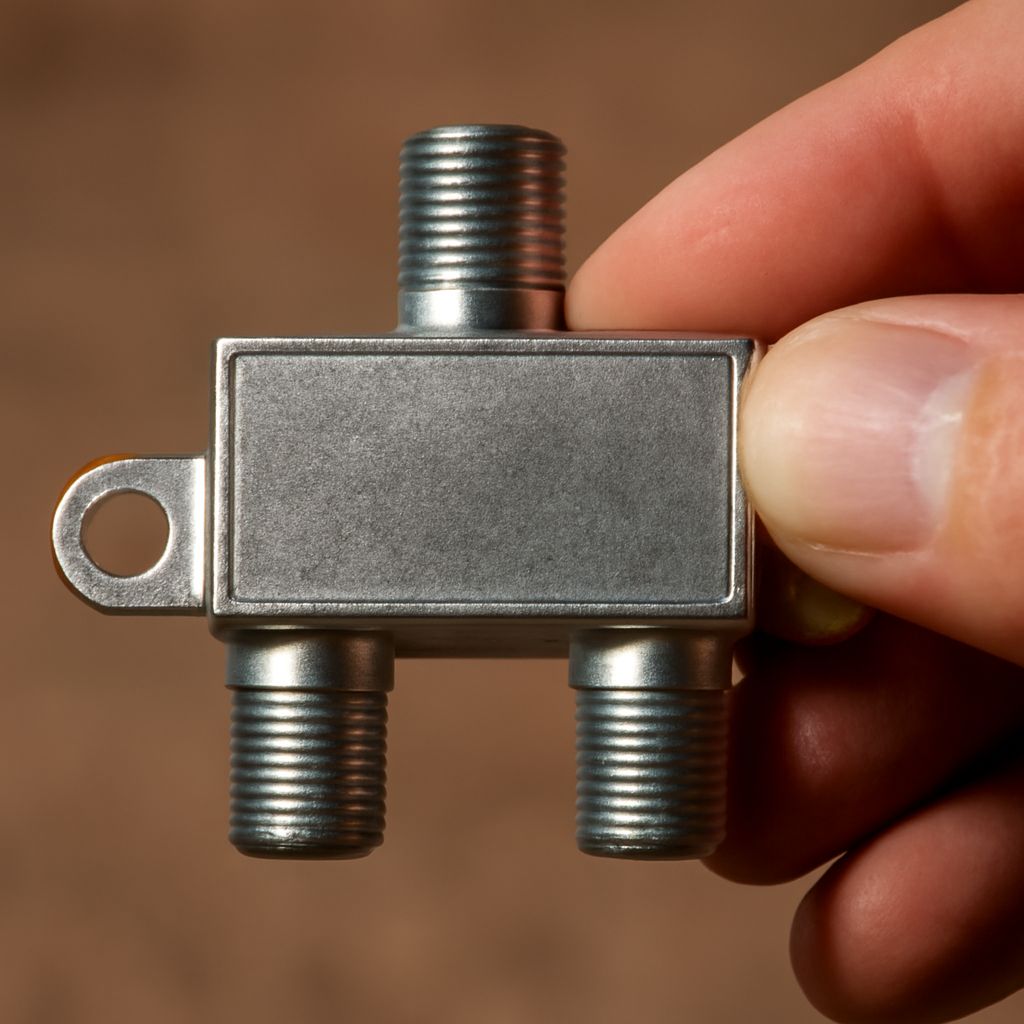
Keep coax short, use intact RG6 connectors, avoid sharp bends, and do not run it parallel to power cables. A two-way splitter typically costs about 3.5 dB, while a four-way splitter can cost about 7 dB before cable loss. Remove unused splitters first.
Add a low-noise preamplifier near the antenna only after placement and cabling are optimized. It can offset long cable or splitter loss, but it cannot correct poor aiming, multipath, or a missing frequency band. Too much gain can overload the tuner and make strong stations worse.