Choose an access point vs bridge setup based on what the device connects to. If your goal is Wi-Fi for an existing LAN, use an access point. If you need to carry that LAN across a wireless link to a distant wired segment, use a bridge. Use a router when you need a separate network with its own routing, DHCP, and NAT.
The key distinction is traffic direction. An access point connects wireless clients to a wired network. A bridge connects one network segment to another, usually with a wireless uplink. A router connects different IP networks and decides where traffic should go.
What do a router, access point, and bridge each do?
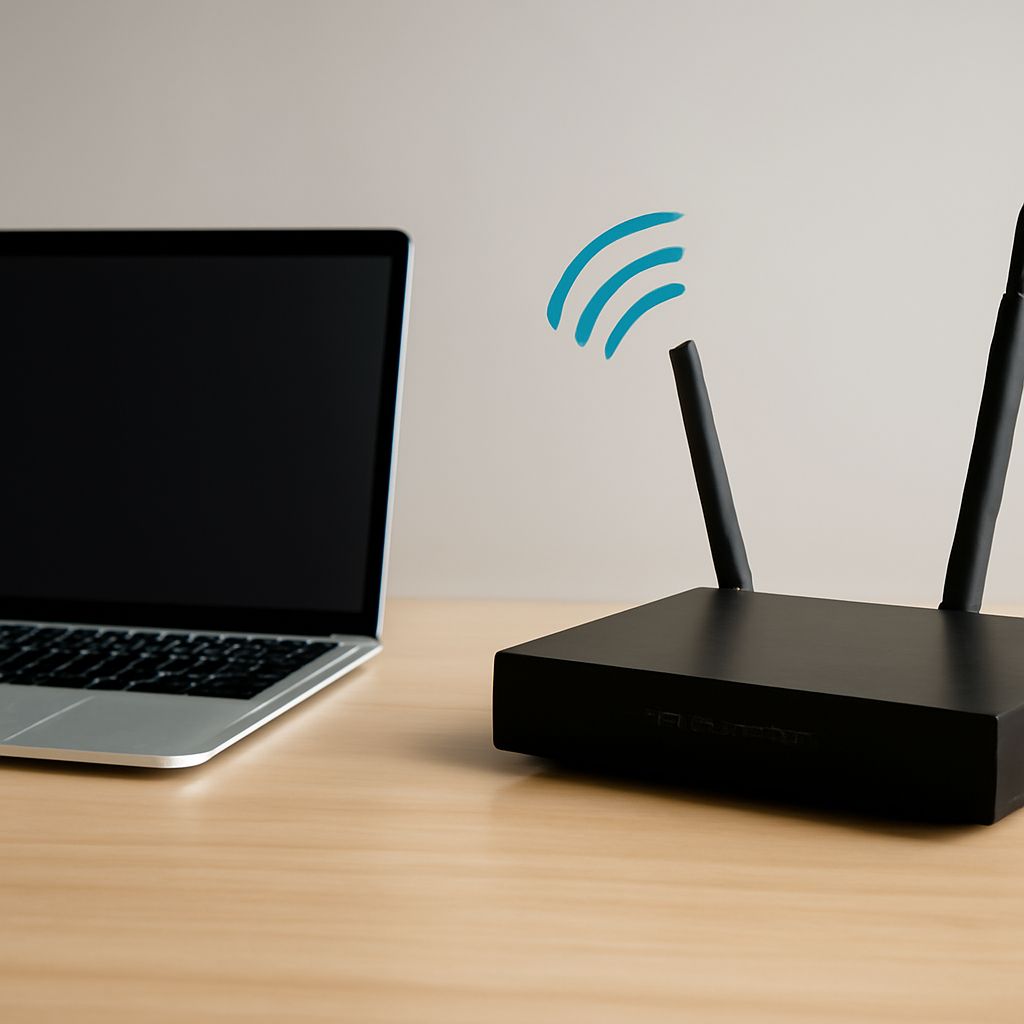
A router connects a LAN to another network, such as the internet. It normally provides DHCP addresses, performs NAT between the LAN and WAN, and uses routing rules to move packets between subnets. Its WAN and LAN ports have different network roles.
An access point adds wireless client access to an existing wired LAN. It usually does not provide a second DHCP service, perform NAT, or create a separate subnet. Wireless phones, laptops, and other clients join the same LAN as devices connected by Ethernet.
A bridge joins two network segments at Layer 2. In a wireless bridge, the bridge devices use a wireless link as their uplink, then pass Ethernet traffic to the remote side. The bridge itself normally does not route, assign addresses, or perform NAT.
Diagram 1: Router Internet → router WAN → router LAN → wired and wireless clients.
Access point vs bridge: Which direction does traffic take?
An access point primarily carries traffic between a wired Ethernet uplink and multiple wireless clients. A laptop sends frames over Wi-Fi to the access point, which forwards them onto the LAN. Replies travel back through the same access point. The AP is a client-facing device.
A bridge carries traffic between two network sides. One bridge connects to the main LAN, while its wireless peer connects to a remote switch, computer, camera, or another wired device. Those remote devices can appear to be on the original LAN, even though the physical connection between segments is wireless.
That difference matters: an access point and a bridge are not interchangeable just because both can pass Ethernet traffic. An AP is designed to accept many Wi-Fi clients. A bridge is designed to provide a wireless backhaul for another segment; some client-bridge modes support only one downstream device or have limits on MAC addresses.
Diagram 2: Wireless bridge Main LAN → bridge A → wireless link → bridge B → remote Ethernet segment.
How do you connect a wired Wi-Fi access point?
A wired wifi access point uses an Ethernet uplink to the existing router or switch. Put it where coverage is needed, then configure it as AP mode rather than router mode. In this setup, the main router remains responsible for DHCP, NAT, and routing.
- Connect an Ethernet cable from a LAN port on the router or switch to the access point’s Ethernet port. Avoid the AP’s WAN or internet port unless its instructions specifically designate that port for AP mode.
- Disable the access point’s DHCP server and routing functions. Give it a management IP address in the main LAN’s subnet, preferably outside the router’s automatic DHCP pool.
- Set the SSID and security settings. You can match the existing Wi-Fi name and password for easier roaming, or use a separate name to identify the new coverage area.
Diagram 3: Wired access point Router LAN → Ethernet cable → access point → Wi-Fi clients on the same LAN.
Which layout needs a wireless bridge router?
A wireless bridge router is useful when a device supports a bridge, client-bridge, or WDS mode and you need to connect a remote wired area without installing cable. Confirm the selected mode: the same hardware may also offer router, repeater, or access-point modes with different behavior.
- Adding Wi-Fi to one existing network: Choose a wired access point. The router supplies DHCP, NAT, and routing; the AP supplies wireless client access.
- Linking two wired segments: Choose a matched wireless bridge pair. Connect one bridge to the main switch and the other to the remote switch. Keep both segments on the same LAN if you want existing services and devices to remain reachable.
- Creating a separate routed network: Choose router mode. Connect the new router’s WAN side to the upstream LAN, leave DHCP and NAT enabled, and use a different LAN subnet. Devices behind it will be separated from the upstream network unless routing or firewall rules allow access.