Most people judge reception by the bars on a phone, but bars are only a rough shortcut. If you want a real answer to how to boost cell phone signal strength for free, start by checking signal strength dBm and, when available, the rssi level. Those readings give you a more reliable view of your connection than the icon at the top of the screen.
The practical goal is simple: measure first, then test free changes in place, height, orientation, and network mode. That lets you find the strongest spot in a room, car, or building without guessing.
What do RSSI and dBm measure?
RSSI meaning is received signal strength indicator. In plain language, it is a measure of how much cellular signal your phone is receiving. It is useful, but it is not the whole story. Different phones and networks may show different labels or hide the number inside field-test or settings menus.
dBm stands for decibel-milliwatts, a standard way to measure signal power. For cellular reception, the number is usually negative. That is normal. A value closer to zero means a stronger signal. For example, -70 dBm is stronger than -95 dBm, and -95 dBm is stronger than -110 dBm.
That can feel backward at first, but the logic is straightforward: because the numbers are negative, less negative equals more powerful. So if your phone moves from -109 dBm to -97 dBm, the signal improved.
RSSI and dBm are related, but they are not identical in every device or network screen. Some phones show one number, some show both, and some show only bars. When you can see a numeric reading, it is easier to compare one location against another and test whether a change actually helped.
How do you read cellular signal strength on a phone?
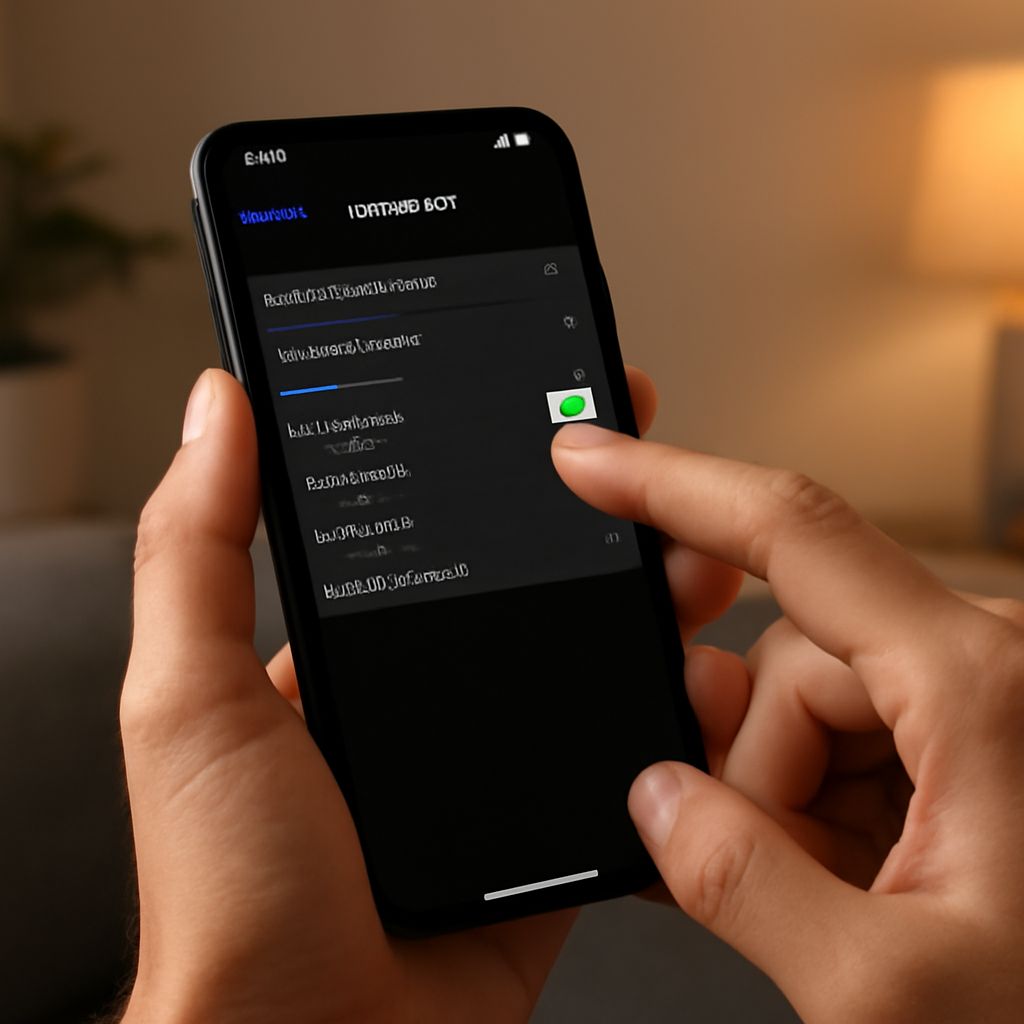
Look for the signal value in your phone’s status, field-test, or network information screens. The exact path depends on the device and carrier, but the key is consistency: use the same phone and same screen each time you test.
Use the number as a relative measurement, not a promise. A stronger dbm signal strength reading usually means a better chance of stable calling, texting, and data, but one reading does not guarantee a certain speed or call quality. Congestion, tower load, indoor construction, and backhaul can still affect performance.
As a rough guide, these readings are often experienced this way:
- -50 to -70 dBm: very strong
- -71 to -85 dBm: good and usually usable for most tasks
- -86 to -100 dBm: fair to weak, with more dropouts likely indoors
- Below -100 dBm: weak, with data and calls often less reliable
These are practical ranges, not guarantees. A strong reading can still feel slow if the network is crowded, and a weaker reading can still work if the tower is uncongested and nearby.
If you are comparing spots, keep the phone in the same mode and note the rssi level or dBm value after each move. Small changes matter. A shift of 3 dB is noticeable; a shift of 10 dB is substantial.
What free tests can improve your signal?
The best no-cost fixes are controlled tests. Change one variable at a time, then check the reading again. That is the fastest way to find whether the problem is location, building materials, device orientation, or network selection.
How can location and height help?
Start with placement. Move the phone from an interior room to a window, then from a low surface to a higher one. Height often helps because it can reduce interference from furniture, people, appliances, and dense building materials. Near a window, the phone may have a clearer path to the tower.
Test at least three spots:
- near an exterior window
- near the center of the room
- one floor higher or lower, if available
Keep the phone still for a moment at each spot and compare the numbers. If one location improves by several dB, that spot is your best free fix for calls or downloads. In a home office, a desk near a window may outperform a deeper corner of the room. In a vehicle, a cup holder may read worse than a dashboard or windshield-side mount.
Obstacles matter. Thick concrete, brick, metal framing, tinted glass, large appliances, and even certain low-E windows can weaken reception. If the signal improves as you move away from those barriers, the issue is not the carrier alone; it is the path between the phone and the tower.
Does airplane mode or network mode change reception?
Yes, sometimes. Turning airplane mode on and off can force the phone to reconnect to the network, which may prompt it to select a better nearby tower. This does not create signal, but it can improve the way the phone attaches to the network when the previous connection was poor.
Try this sequence:
- Note the current dBm reading.
- Switch on airplane mode for 10 to 15 seconds.
- Switch it off and let the phone reconnect.
- Check whether the reading changed.
Network mode can also matter if your phone supports more than one connection type. For example, if 5G is available but unstable in your location, testing a supported LTE-only or 4G mode may produce a steadier result. In some places, a lower-generation network has better penetration indoors and a more reliable connection than a flashy but inconsistent newer one.
That said, do not assume the fastest network label is always best. Compare the actual reading and the real-world result. A phone may show a decent signal on one mode but still struggle because the tower is busy or the backhaul is weak.
When is weak signal not the only problem?
A low dBm reading is one problem, but it is not the only reason service feels bad. Three other factors often matter just as much:
- Signal quality: noise and interference can degrade usable performance even when raw signal strength looks acceptable.
- Congestion: a busy tower can slow data and delay calls during peak hours.
- Backhaul performance: the tower’s connection to the wider network may be limited, which creates bottlenecks that your phone cannot fix.
This is why a single dBm value should not be treated as a guaranteed speed test. Two phones in the same spot can behave differently if they support different bands, carriers, or network modes. Even the same phone can perform differently at noon and late at night because load changes.
If your dBm reading is weak, start with placement, height, and orientation. If the reading is already decent but the phone still performs badly, look beyond raw signal. Try another network mode, retest after an airplane-mode reconnect, and compare the result at different times of day. That combination of simple checks will tell you whether the issue is reception, quality, or network capacity.