UHF vs VHF is not a universal winner: the better band depends on frequency, antenna size, terrain, buildings, and the service using it. VHF generally offers better diffraction and open-area coverage, while UHF supports smaller antennas and can work well in dense built environments when the system is designed for it.
The key comparison is consistent for both bands. Higher frequency means shorter wavelength, which changes antenna dimensions, obstacle behavior, and how closely a system depends on line of sight. Broadcasting and two-way radio also apply different channel and equipment rules, so their choices should be evaluated separately.
UHF vs VHF frequency ranges: what do the bands mean?
VHF, or very high frequency, covers 30 to 300 MHz. Its wavelengths range from about 10 meters at 30 MHz to 1 meter at 300 MHz.
UHF, or ultra high frequency, covers 300 MHz to 3 GHz. Its wavelengths range from about 1 meter at 300 MHz to 10 centimeters at 3 GHz.
That boundary is useful, but each band contains a wide range of operating frequencies. A 50 MHz VHF system and a 250 MHz VHF system will not behave identically, just as a 400 MHz UHF system differs from a 2.4 GHz system. Frequency, antenna height, transmitted power, receiver sensitivity, and the surrounding environment all affect practical coverage.
Wavelength and antenna size: why does frequency matter?
Wavelength is approximately 300 divided by frequency in megahertz. As frequency rises, wavelength becomes shorter, allowing an effective antenna to become smaller.
- At 150 MHz, one wavelength is about 2 meters; a quarter-wave antenna is about 50 centimeters long.
- At 450 MHz, one wavelength is about 67 centimeters; a quarter-wave antenna is about 17 centimeters long.
These are representative electrical dimensions, not exact finished antenna lengths. Antenna design, loading coils, ground planes, matching networks, and the required directional pattern change the physical result. A VHF antenna usually needs longer elements than a UHF antenna with a comparable design, which matters for vehicle installations, handheld radios, rooftop antennas, and portable equipment.
The shorter UHF wavelength also makes it practical to build compact arrays with closely spaced elements. VHF antennas can achieve high gain too, but they generally require more physical space.
VHF or UHF for range and terrain: how do signals behave?
VHF often has the advantage across open or rolling terrain. Its longer wavelength diffracts more readily around hills, ridges, and some large obstacles. At the same power and with comparable system conditions, it also tends to experience less free-space path loss. This is why VHF is commonly considered for rural coverage, although antenna height and repeater placement can matter more than the band.
UHF signals behave more like straight-line rays. They are more dependent on a clear radio path and are more easily blocked by terrain, dense foliage, and large structures. UHF can still deliver excellent range from a high site or repeater, but a small change in antenna location may produce a large change in signal strength.
Neither band automatically provides longer range. A high, well-installed UHF antenna can outperform a poorly placed VHF antenna. Receiver sensitivity, interference, bandwidth, transmitter power, antenna gain, and Fresnel-zone clearance should be considered alongside frequency.
VHF vs UHF for buildings, broadcasting, and two-way radio: which fits?
Buildings and local obstructions
Building performance is material- and layout-dependent rather than a simple VHF-versus-UHF rule. Lower-frequency VHF generally diffracts better and can suffer less absorption through some walls, foliage, and natural obstructions. UHF is more strongly affected by reinforced concrete, metal, coated glass, and dense interior construction, and its reflections can create dead spots or rapid signal changes.
However, UHF’s shorter wavelength can pass through some openings and support compact indoor antennas, and reflections may help it reach users around corners. In a particular building, floor plan, wall materials, antenna position, and repeater design determine the result. Testing at the actual operating site is more reliable than choosing by band alone.
Broadcast television
For broadcast TV, VHF channels use lower frequencies and therefore need larger antenna elements. They can be useful for wider-area coverage and may bend around some terrain more effectively. UHF TV channels use smaller antenna elements, but reception is generally more line-of-sight and can be more sensitive to hills, trees, and nearby structures. A TV antenna must support the channels used by local broadcasters; an antenna optimized only for UHF is not equivalent to a full VHF/UHF model.
Two-way radio
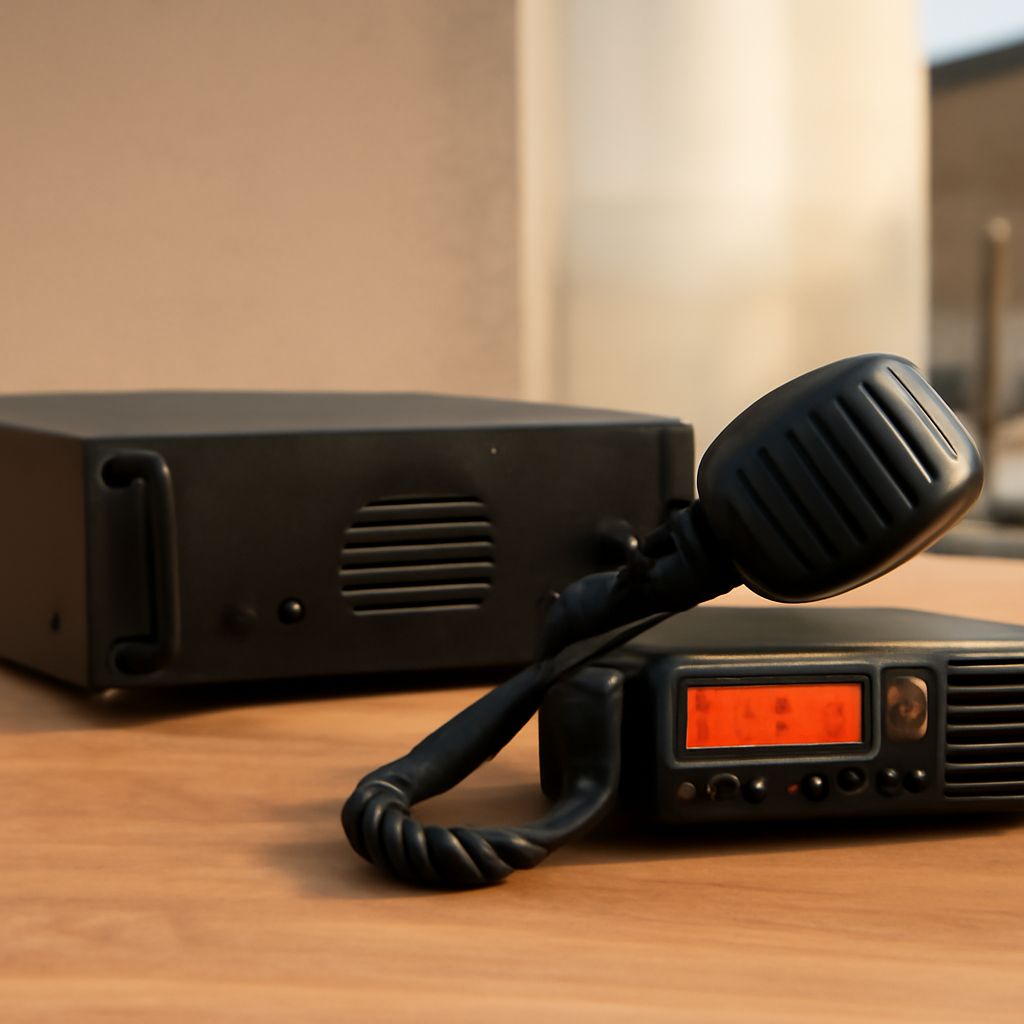
For two-way radio, VHF is often a practical choice for farms, highways, forests, and other open rural areas. UHF is often selected for offices, warehouses, campuses, and city operations where compact radios and dense local coverage are valuable. These are application patterns, not universal operating rules: licensed frequencies, repeaters, antenna sites, building materials, and the radio system’s design decide whether VHF or UHF performs better.