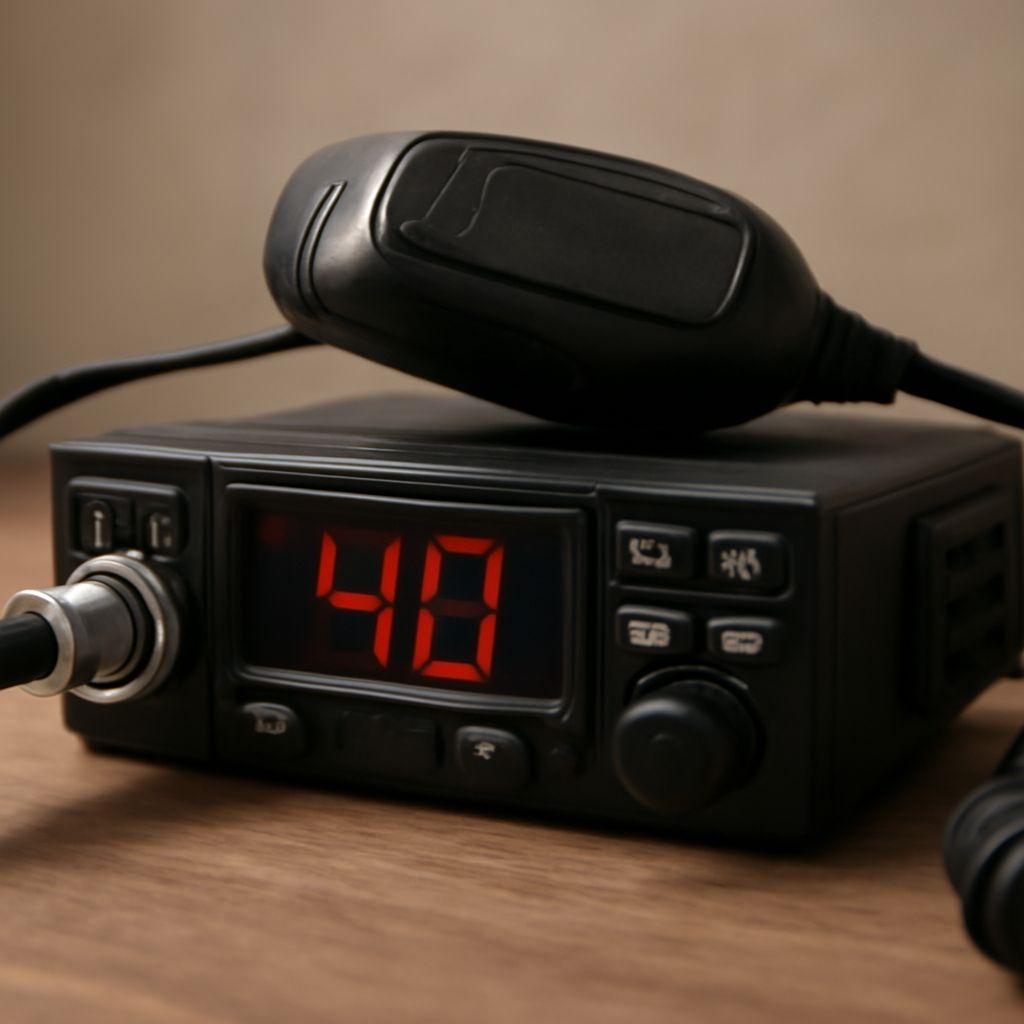
Install the radio where you can reach it without taking your eyes off the road, then give the antenna system a clear path and a reliable ground. A properly fitted CB radio mount, microphone hanger, fused power lead, coaxial cable, and antenna turn a loose collection of parts into a usable mobile station.
Once the installation works, learn a few common CB radio codes, but treat them as shorthand rather than a required language. Clear plain speech remains the best way to avoid misunderstandings and connect with local operators or CB radio clubs.
How do you secure a CB radio mount in your vehicle?
Choose a mounting position that is solid, reachable, and outside the deployment path of airbags. Under-dash mounting is common, but check knee clearance and make sure the radio will not interfere with pedals, the gear selector, ventilation, or visibility. A center console or overhead location can work if it does not block controls.
- Test the position first. Sit in the normal driving position and confirm that you can change channels and adjust volume without leaning forward.
- Use the supplied bracket. Hold the bracket against a strong metal or reinforced panel, mark the holes, and check behind the panel before drilling. Avoid wiring looms, fuel lines, and electronics.
- Fasten it firmly. Use machine screws, locking nuts, or suitable self-tapping hardware. The radio should not shift when you operate a control or drive over a rough surface.
- Secure the microphone. Install the hanger where the microphone can be returned with one hand. Keep its cord clear of the steering wheel, shifter, pedals, and airbag panels.
After tightening the radio, pull gently on the bracket and microphone hanger. Movement, rattling, or a cable that can reach a pedal indicates that the installation needs correction before the radio is powered.
How do you complete the power, coax, and antenna installation?
Disconnect the vehicle’s negative battery terminal before making power connections. Run the radio’s positive lead to a fused 12-volt source sized for the radio, placing the fuse close to the power source. Connect the negative lead to a clean, solid chassis ground or to the manufacturer’s recommended ground point. Do not rely on a painted bracket or a thin decorative panel for grounding.
Route the coaxial cable from the radio to the antenna without crushing, sharply bending, or pinching it. Keep it away from hot exhaust components and moving hinges. Leave enough slack near the radio and antenna for service, but do not coil a long excess tightly beside the radio. A damaged coax can reduce range and make tuning readings unreliable.
Mount the antenna on a location with a useful ground plane, such as the center of a metal roof or a properly installed trunk-lid mount. A hood, fender, or mirror mount may be more convenient but can produce a less balanced radiation pattern. Tighten the mount so vibration cannot loosen it, and confirm that the antenna tip will clear garages, branches, and overhead signs.
With the antenna connected, use an SWR meter according to its instructions. A reading close to 1:1 is ideal; a reading around 1.5:1 or lower is generally a useful target, while a persistently high reading suggests a poor ground, damaged coax, loose connection, or antenna that needs adjustment. Do not transmit repeatedly into a disconnected or faulty antenna. A successful installation has clean power, no blown fuse, a stable antenna mount, and an SWR reading that does not change dramatically when the doors or trunk are opened.
What do common CB radio codes mean, and when should you use plain language?
10-codes shorten routine exchanges, but usage differs by region, club, age of the operator, and local tradition. Learn the meaning from context rather than assuming every operator uses a code identically.
- 10-4: “Message received” or “understood.” It confirms that you heard the other station.
- 10-9: “Repeat your last transmission.” Use it when static, distance, or overlapping transmissions made the message unclear.
- 10-20: “What is your location?” You may also hear “What’s your 20?”
- 10-7: “Out of service” or leaving the radio for a while.
- 10-33: An urgent or emergency message in some groups. Because the meaning and local procedures vary, state the emergency plainly as well.
Common slang includes breaker for someone asking to join a conversation, copy for understanding a transmission, and good buddy as a friendly form of address. A bear or smokey may refer to a police officer, while the mobile simply means the vehicle station. Slang can be playful, outdated, or regional, so do not depend on it for safety information.
Plain language is preferable when giving a road hazard, directions, a name, or an emergency report: “There is a stalled vehicle on the right shoulder just past the bridge.” You can add “10-4” after receiving instructions, but avoid filling every sentence with codes. Listen before transmitting, wait for a clear break, identify the intended station, and keep your message brief.
How do CB radio clubs help new operators?
A local club gives a new operator people to contact after the installation is complete. Many clubs hold scheduled nets, where members check in at a set time, exchange signal reports, share local traffic information, or practice radio procedure. A net may be formal, with a net control station directing each turn, or informal and conversational.
Clubs can also organize:
- Technical help: Members may inspect a mount, coax connector, antenna ground, microphone, or SWR reading and help isolate a fault.
- Events and outings: Convoys, charity drives, swap meets, and trail or community events provide practical opportunities to use a mobile CB.
- Local contacts: Regular operators can explain busy channels, customary language, coverage gaps, and useful routes in the area.
- Operating practice: Friendly check-ins help beginners learn when to speak, how to request a radio check, and how to end a conversation courteously.
Before joining, listen to one or two nets and check whether the group publishes a schedule, welcomes beginners, and explains its channel etiquette. A useful club answers basic questions without mocking new operators, separates routine conversation from urgent traffic, and offers practical help rather than requiring expensive equipment. Choose the group whose meeting times, coverage area, and communication style fit how you actually drive and use the radio.