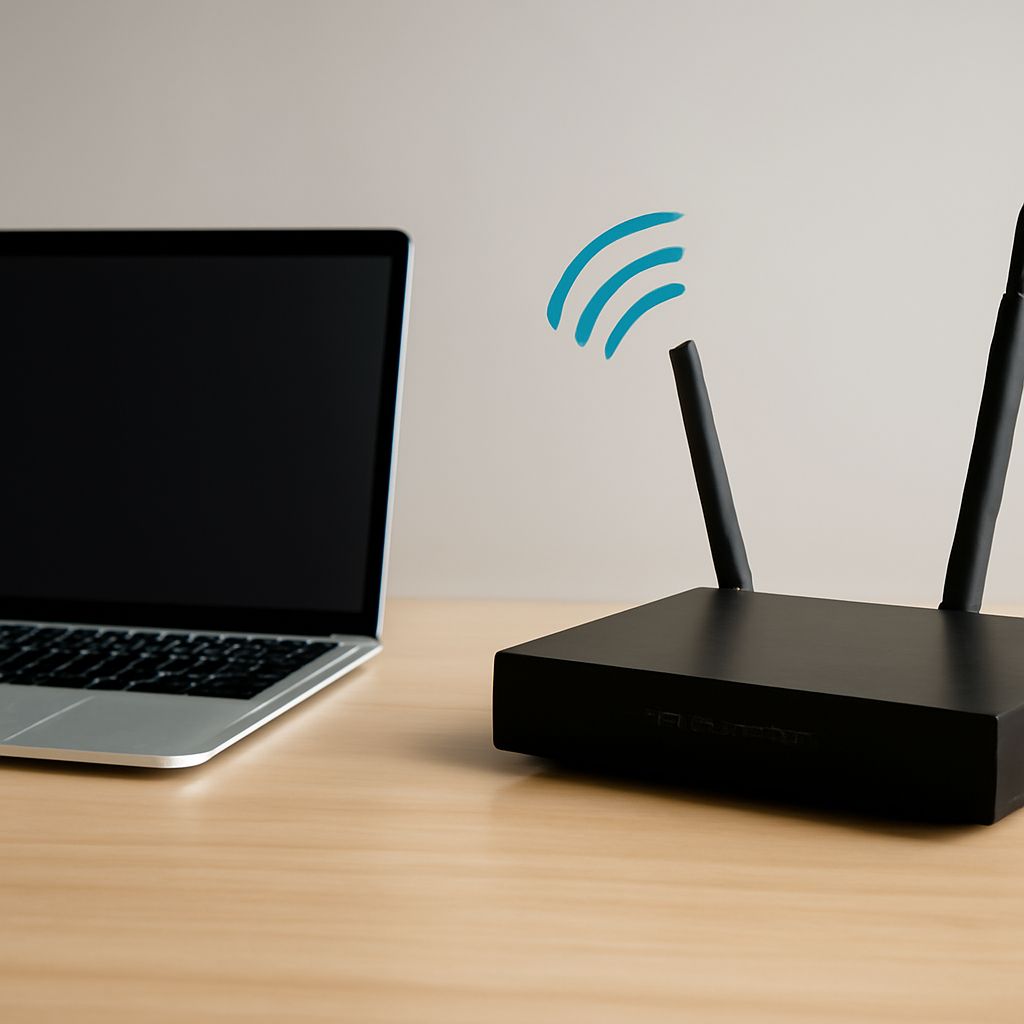
GMRS rules point to the better choice when a family wants reliable group communication, higher-powered mobile radios, or repeater coverage. Choose CB when you want license-free operation, highway traffic, and access to a large community of truckers and road users. GMRS generally offers clearer short-range coverage and more flexible equipment; CB remains practical for vehicle-to-vehicle road communication.
The same handheld, mobile, and base scenarios produce different results because the services use different frequencies, antennas, power limits, and operating habits. Range estimates only mean something when terrain, antenna height, installation, and legal power are matched.
GMRS rules: Which service is better for your use?
GMRS operates in the UHF band near 462 and 467 MHz on 22 designated channels. In the United States, an FCC GMRS license is required, and one license covers the licensee’s immediate family. GMRS radios must be certified for the service. Operators also identify the station with the assigned call sign as required by the rules.
Power limits vary by channel. Channels 8 through 14 are limited to low power, while other channels allow higher power for compatible mobile and base equipment. That makes GMRS more scalable than a typical handheld: a family can begin with compact radios, then add a vehicle-mounted unit or outdoor base station without changing services.
GMRS also permits repeaters on designated channel pairs. A repeater receives a low-power transmission and retransmits it from a higher location, potentially extending coverage across valleys, neighborhoods, or large properties. Privacy tones can keep a radio quiet until the matching signal is heard, but they do not make a conversation private.
Choose GMRS for a family group that needs coordinated communication, especially when members use a mixture of handhelds and vehicles. It is also the stronger option for rural property, outdoor activities, and local communication where a repeater is available.
How does CB radio talk work on shared channels?
CB radio talk takes place on 40 shared channels around 27 MHz. No individual license is required, and users commonly operate mobile radios in cars and trucks, handheld units, or base stations with outdoor antennas. CB supports AM and, on compatible equipment, single-sideband operation. Legal power is limited to 4 watts AM or 12 watts peak-envelope power for SSB.
CB users select a channel, listen before transmitting, and keep messages brief because many stations may share the same frequency. Channel 19 is widely used for highway information, while channel 9 is associated with emergency traffic. Handles are common, and CB does not use GMRS-style repeater networks. Squelch controls reduce background noise, but CB has no true privacy function.
CB can be a better fit for road users who want to hear nearby traffic conditions from strangers, not just communicate with a private group. A well-installed vehicle antenna is essential; a short magnetic antenna or poorly bonded mount can reduce performance sharply.
What determines CB radio distance in real conditions?
CB radio distance depends more on antenna efficiency, height, terrain, and installation than on the radio label. The following planning figures assume open-to-rolling terrain, legal power, stock handheld antennas, properly matched vehicle antennas mounted on the vehicle exterior, and outdoor base antennas about 20 to 30 feet above ground. They exclude unusual long-distance “skip” conditions caused by atmospheric propagation.
- Handheld: GMRS commonly manages about 1 to 3 miles between units in open conditions. CB handhelds often provide roughly 0.5 to 2 miles because their short antennas are inefficient at the lower CB frequency.
- Mobile: A GMRS vehicle radio may cover about 3 to 10 miles directly, while a properly installed CB mobile setup may cover about 2 to 8 miles. Hills, buildings, trees, and bodywork can reduce either result.
- Base: With comparable antenna height and a clear path, both services can cover roughly 5 to 15 miles directly. GMRS gains a major advantage when a repeater provides 10 to 30 miles or more across favorable terrain; CB has no equivalent standard repeater path.
GMRS’s higher frequency usually favors compact antennas and clear line-of-sight paths, but it can be weakened by dense buildings and terrain. CB antennas are physically larger, yet the lower frequency can sometimes bend or travel along flatter ground more effectively. Height and a properly tuned antenna remain more important than advertised maximum range.
Which radio fits family groups, road use, or fixed local communication?
- Family groups: Select GMRS handhelds for predictable local coverage, shared licensing, and the option to add a mobile radio or repeater. Use matching channels and tones, and teach everyone to pause before transmitting.
- Road use: Select CB for highway travel when hearing truckers, road reports, and nearby drivers matters. Select GMRS instead when the same vehicles need a private group channel and do not need general traffic.
- Fixed local communication: Use a GMRS base station and elevated antenna for a household, farm, or property, particularly if a local repeater is reachable. A CB base can work well for nearby homes or road monitoring, but its larger antenna and shared-channel congestion require more careful installation and expectations.