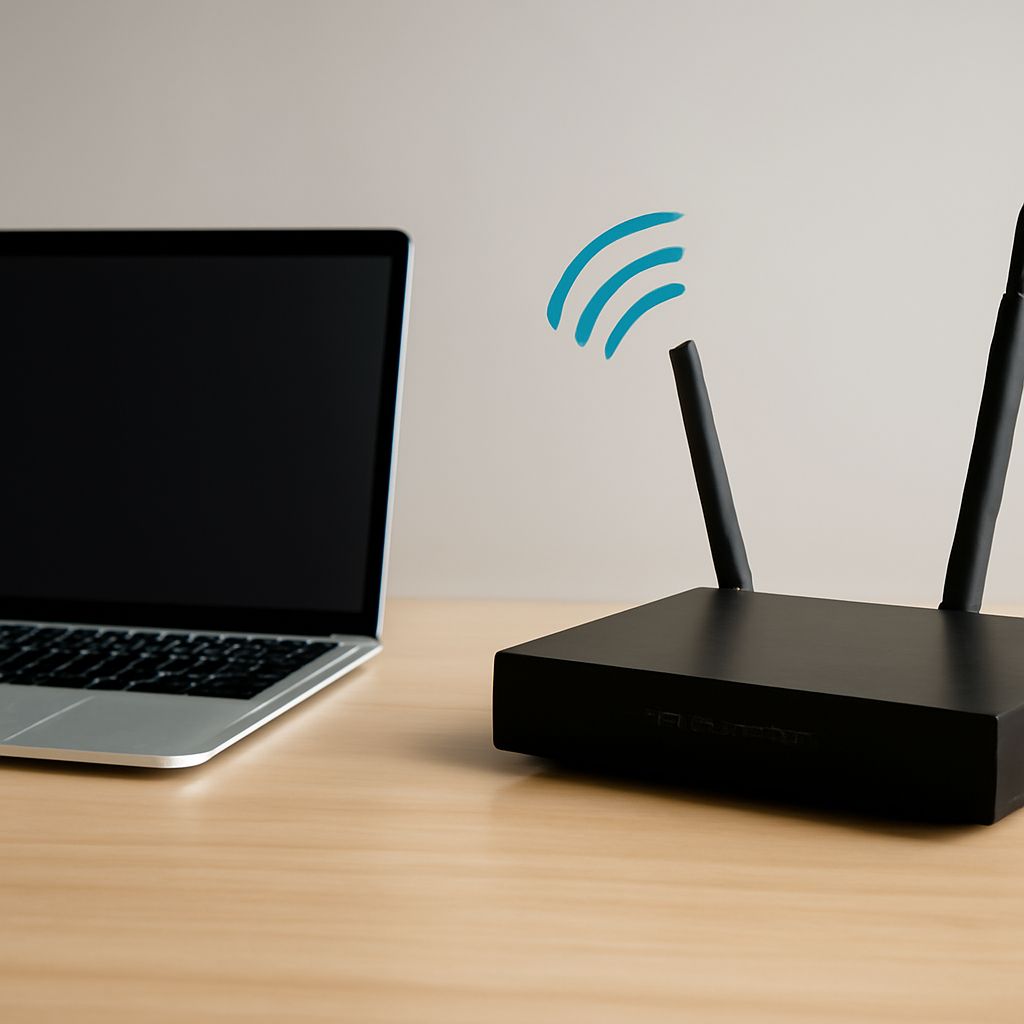
The difference between repeater and access point is how each device receives the network. An access point uses a wired Ethernet connection to provide Wi-Fi, while a repeater receives Wi-Fi wirelessly and retransmits it. If you can run a cable, an access point is usually the faster, more stable upgrade.
First connect a computer directly to the router. That test separates an internet, router, or cable problem from a weak wireless signal and shows whether an access point or repeater is appropriate.
Difference Between Repeater and Access Point: Which Is Better?
An access point is best when you can provide Ethernet backhaul. It sends network traffic through the cable, then broadcasts Wi-Fi in another room or area. Because the wireless clients do not share radio time with a wireless link back to the router, an access point generally delivers better throughput, lower latency, and more consistent performance.
A repeater, also called a range extender, connects to the router over Wi-Fi and retransmits that connection. It can solve a coverage gap without new cabling, but it must be placed where it still receives a strong signal. Putting it inside the dead zone gives it little usable data to repeat. Since it uses the same wireless connection to receive and send traffic, capacity can fall and latency can rise.
Choose an access point for a home office, streaming area, gaming setup, or any location where you can install Ethernet. Choose a repeater when running cable is impractical and the required device is only making light network demands. An access point can usually use the same network name and password as the main router, but roaming between units may not be seamless unless they support a coordinated mesh or controller system. Repeaters are simpler to place, though their setup and management options vary by model.
How to connect a computer to a router with an Ethernet cable
- Find the Ethernet port on the computer. It is a wider network socket, often marked “Ethernet” or with a network symbol. A thin laptop may require a USB-to-Ethernet adapter.
- Plug one end of an Ethernet cable into the computer and the other into a numbered LAN port on the router. Do not use the router’s WAN or internet port for this direct computer connection. Cat5e or better is suitable for most home gigabit links.
- Wait several seconds for the link lights on the router and computer adapter to appear. The operating system should normally obtain an IP address automatically from the router’s DHCP service.
- Open the computer’s network settings and confirm that it has an address, a default gateway, and a connected status. An address beginning with 169.254 usually means the computer did not receive an address from the router.
- Open the router’s gateway address in a browser, then visit a reliable website. Reaching the router but not the internet points toward the router’s WAN connection, DNS, or service provider. Failing to reach the router suggests a local cable, port, adapter, or router problem.
If there is no link light, try another cable and LAN port. Also check that the computer’s Ethernet adapter is enabled. This wired connection is the cleanest way to test the network before changing wireless equipment.
Use Ethernet as a network baseline before extending Wi-Fi
Run a few wired speed tests at different times, and compare the result with your internet plan. A wired test measures the connection without distance, walls, channel interference, or repeater overhead. It will not always equal the advertised plan speed, but it should reveal whether the router is delivering a broadly healthy connection.
If Ethernet is fast and stable while Wi-Fi is poor in one distant room, the main problem is coverage. Keep the functioning router and add a wired access point if possible. The Ethernet cable can serve as the access point’s backhaul, avoiding the performance penalty of wireless retransmission.
If Ethernet is also slow, disconnects, or fails to obtain an address, extending Wi-Fi will not fix the underlying issue. Test another cable and LAN port, check the router, and investigate the internet service before buying an extender.
How often should you replace your wireless router?
There is no mandatory replacement interval, but many home routers are reasonable candidates for replacement after about four to six years. The deciding factors are support, condition, capacity, and wireless standards—not age alone. A well-supported router that remains stable and fast does not need replacement simply because it has reached a particular birthday.
- End of security support: Replace a router that no longer receives firmware updates or security fixes. This is often more important than its maximum Wi-Fi speed.
- Persistent instability: Frequent reboots, dropped connections, failed ports, corrupted settings, or devices repeatedly disappearing from the network can indicate failing hardware. Confirm the problem with firmware updates, a reset, and known-good cables first.
- Excessive heat: A router that is unusually hot, runs in a confined space, or becomes less reliable as it warms may be reaching a hardware limit. Improve ventilation, but replace it if the symptoms continue.
- Capacity limits: Replace an older unit if it cannot handle your number of clients, gigabit internet, modern security, or the traffic from video calls, streaming, and smart-home devices. Older Wi-Fi standards may also limit newer devices even when coverage is adequate.
- A simple distant dead zone: Do not replace a functioning router for this reason alone. Try repositioning it, running Ethernet to a wired access point, or using a coordinated mesh system. A repeater is the fallback when wired backhaul is not practical.
The smallest effective upgrade is therefore a cable and access point for a coverage-only problem, a repeater for a no-cable low-demand area, or a new router when support, stability, heat, capacity, or standards have genuinely become inadequate.