A short Ethernet run across a quiet room may work well with unshielded cable, while a measurement cable near industrial equipment may need extra protection. A shield around twisted pairs can help reduce interference, but a shielded cable with twisted pairs must be selected and installed as part of a complete system.
Shielded Twisted Pair Cable: Two Ways to Resist Noise
A twisted pair wire carries a signal on two conductors wound around each other. In a balanced signaling system, the receiver compares the voltages on the two conductors. Interference that affects both similarly can be rejected, while the intended difference between them is retained. Twisting helps the two conductors encounter a more similar environment along the run.
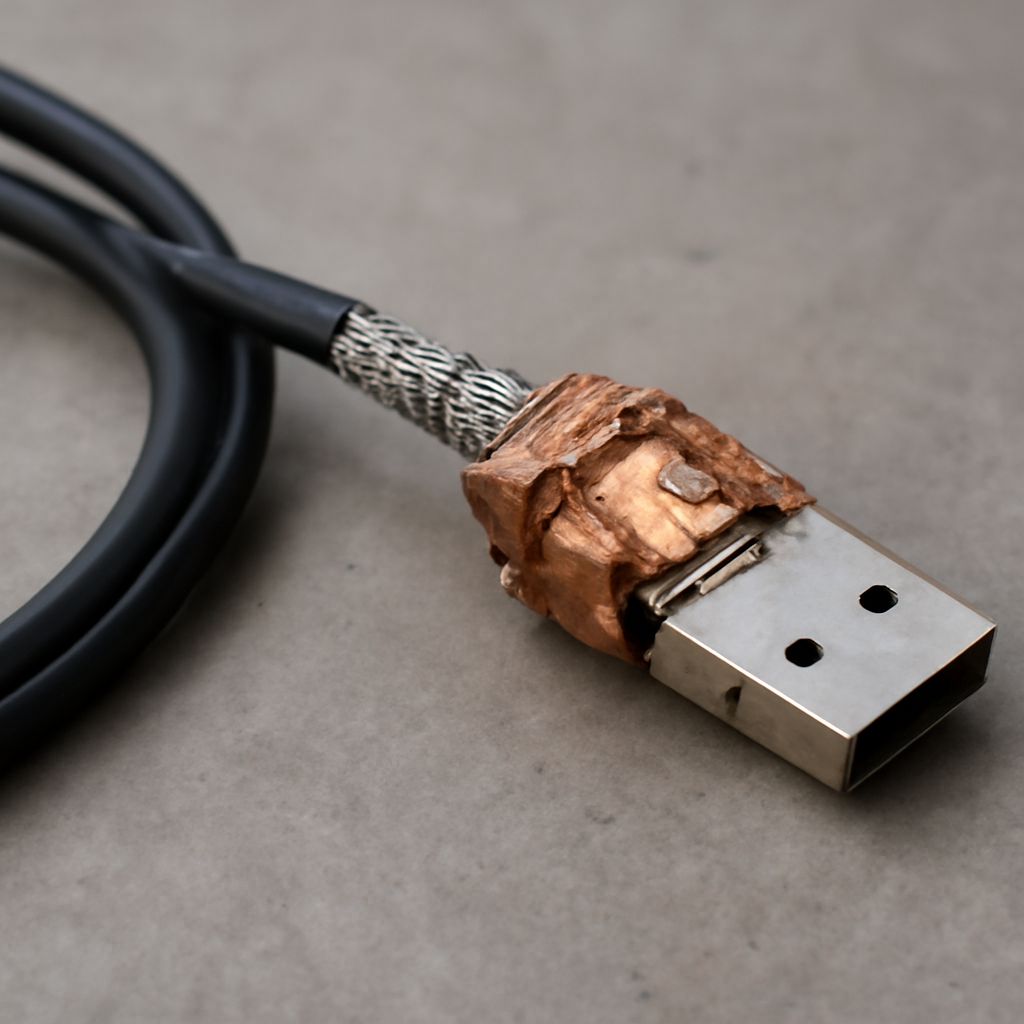
A shielded twisted pair cable adds conductive foil, braid, or both around the pairs. The shield provides another barrier against some external electromagnetic fields and can limit emissions from the cable. Its effectiveness depends on the interference, frequency, construction, and installation.
Different designs place a shield around the whole cable, around individual pairs, or both. Manufacturer notation can describe that construction. For example, F/UTP denotes an overall foil shield with unshielded individual pairs; S/FTP denotes an overall braided screen and individually foil-shielded pairs. Check the product documentation for its exact construction and intended application.
This shielding is not automatically the best answer to every interference problem. Separation from power equipment, correct routing, suitable connectors, and proper termination can be just as important. A damaged cable or an unsuitable grounding arrangement can undermine the result.
Select Cable for the Signal
Start with the equipment’s specified electrical requirements and the installation environment. A cable suitable for one signal may have the wrong impedance, number of pairs, or connector for another.
| Application | What to check |
|---|---|
| Ethernet | Cable category, supported link speed and length, compatible jacks and patch panels |
| Control | Signal type, pair count, voltage rating, conductor size, and equipment instructions |
| Measurement | Signal level, impedance, shielding, connector arrangement, and noise sources |
For Ethernet, category ratings describe transmission performance. Cat 5e and Cat 6 are common choices for gigabit links; Cat 6A is designed for 10 Gbps over a compliant channel up to 100 meters, about 328 feet. That channel includes patch cords and connecting hardware. A shielded Ethernet cable with twisted pairs still needs compatible rated components and correct termination to meet the intended channel performance.
For control circuits, use the equipment manufacturer’s specified cable and electrical ratings. For low-level measurement signals, examine the sensor and instrument instructions: cable capacitance, impedance, shielding, and termination can affect the reading. A pair of twisted wires suited to a sensor is not automatically an Ethernet cable.
A pair of twisted conductors inside a shield is part of the signal path, while the screen is a separate protective structure. Do not substitute the screen for a signal conductor unless the equipment design explicitly calls for that arrangement.
Connect the Shield as a System
A shielded twisted pair depends on the continuity of its screen through the cable and connecting hardware. Use compatible shielded plugs, jacks, patch panels, and equipment where the design requires them. Follow the component manufacturer’s termination instructions, keeping the shield and twists in the paired wires intact as specified.
Bonding and grounding must follow the equipment instructions and applicable electrical and telecommunications rules. The correct arrangement depends on the application and installation; do not assume that connecting a shield to an arbitrary ground point or leaving every shield floating will solve noise. For a building installation, use a qualified installer when the bonding design or local requirements are outside your expertise.
A twisted-pair cable with shielding also needs an appropriate jacket. A shielded cable containing twisted pairs must suit the location as well as the signal. Indoor wall cavities, air-handling spaces, sunlight, moisture, and direct burial can require different ratings. Check the manufacturer’s stated use and local code. Outdoor runs between buildings may raise additional electrical and surge concerns; fiber can provide electrical isolation between endpoints.
Avoid tight bends, crushing, and excessive pulling force. Keep separation from power wiring according to the relevant standards and local requirements. At the end of the run, inspect connectors and test the installed link. A basic continuity test can find some faults, while Ethernet certification requires suitable test equipment and procedures.
Decide Whether Shielding Is Worthwhile
For a short home Ethernet run away from strong noise sources, correctly installed unshielded cable of the appropriate category is often enough. In a noisy equipment area, assess the source, route, and equipment specifications before selecting a screened cable with twisted pairs. For a measurement or control link, follow the instrument’s cable and grounding requirements rather than choosing on category alone.
If the installation has high interference or uncertain bonding, involve an installer who can evaluate the entire path. The useful choice is the cable and termination system that meets the signal’s electrical needs in its actual environment.