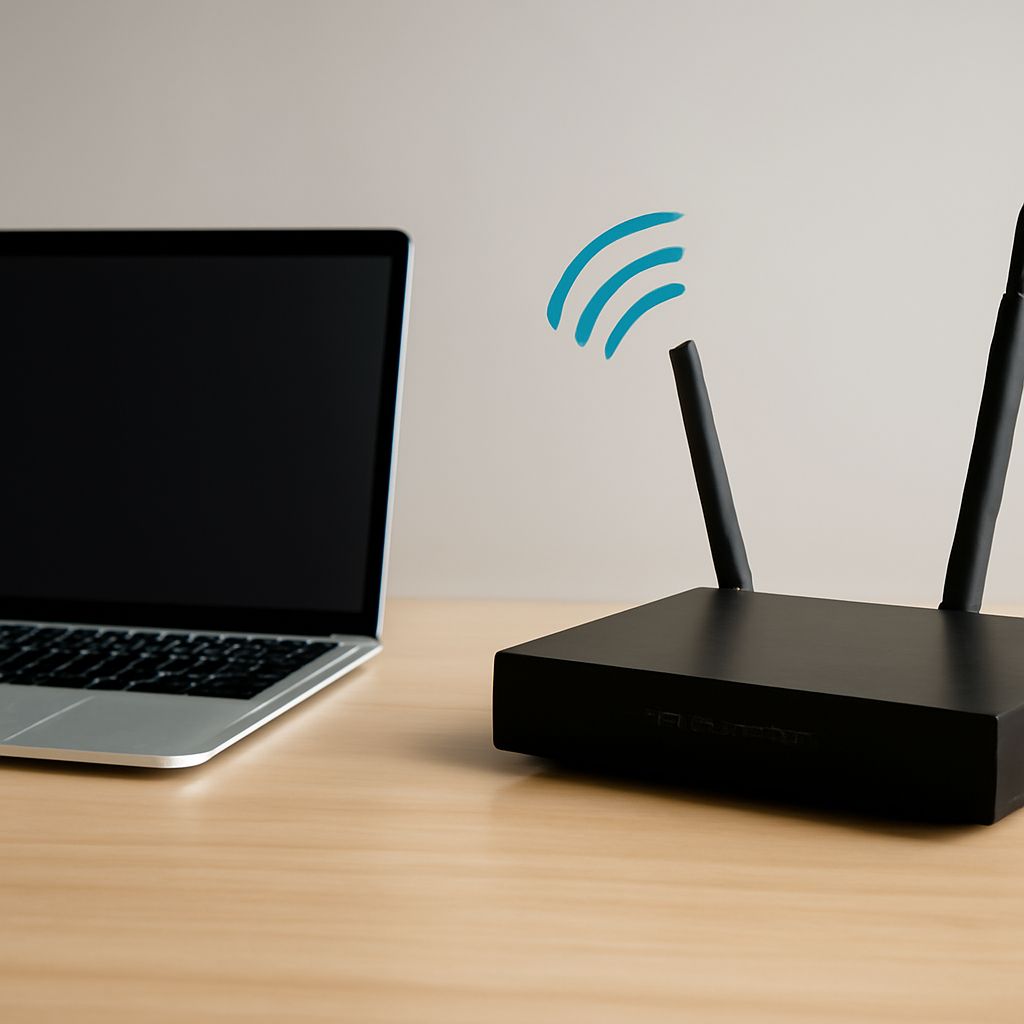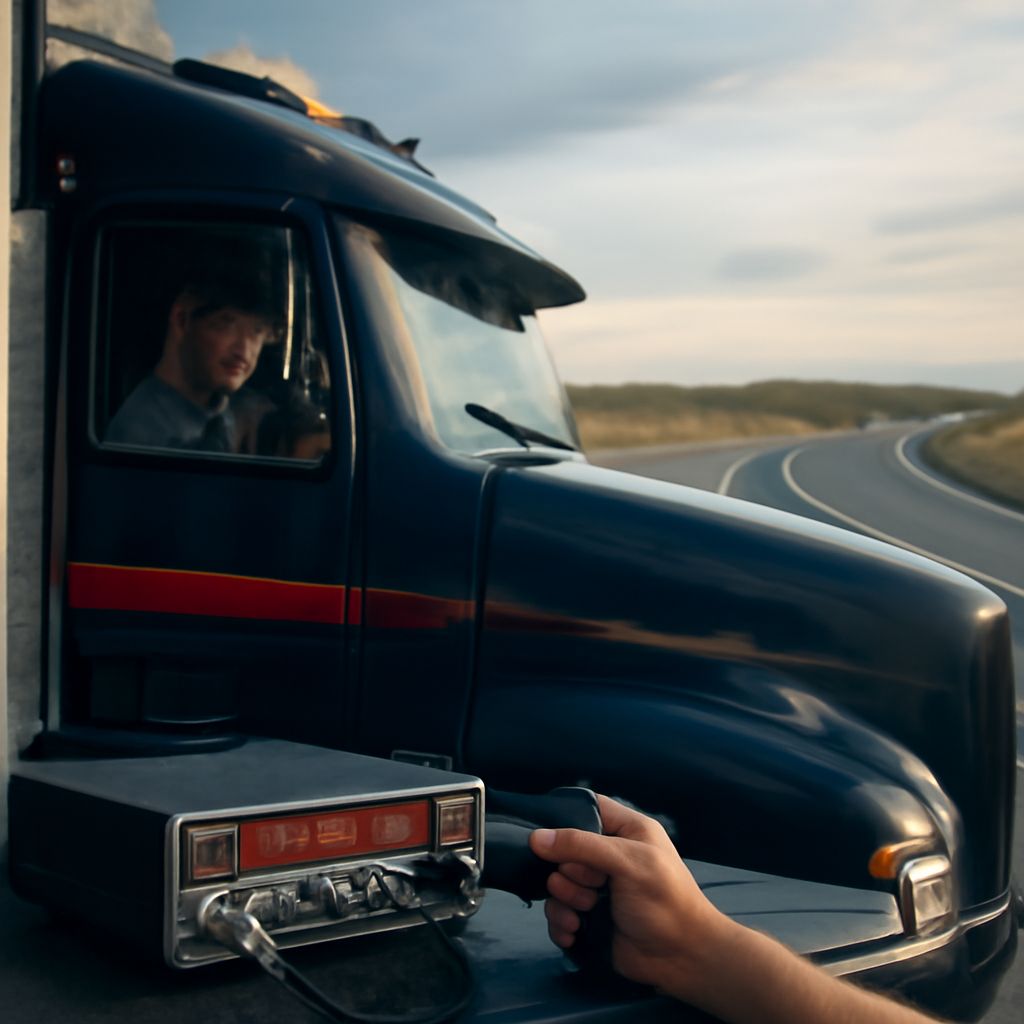
CB radios work as a system: the radio needs a clean power connection, 50-ohm coax, a mechanically solid mount, a properly installed antenna, and an SWR check before regular transmission. For a mobile station, especially a CB radio for truck use, antenna placement and grounding usually affect performance more than buying a higher-priced radio.
A practical installation can provide dependable local communication over roughly 1 to 5 miles in ordinary terrain, but that is only a starting range. Hills, buildings, antenna height, feed-line loss, and temporary propagation can make the useful distance much shorter or much longer.
What do CB radios need for a complete mobile or base station, from power and coax to SWR?
A complete mobile station has six essential parts:
- Radio: Choose an AM model for straightforward local use, or an AM/SSB model if you need more flexibility and compatible stations are active in your area.
- Power connection: Use the manufacturer’s fused power lead. A direct battery connection often produces less electrical noise than a cigarette-lighter socket; keep the fuse close to the power source.
- Coaxial cable: Use 50-ohm coax, commonly RG-58 for a short truck installation. Keep it away from ignition wiring, sharp edges, heat, and tight bends.
- Mount: The mount must support the antenna securely and make a good electrical connection to the vehicle body or an adequate ground plane.
- Antenna: The antenna converts the radio signal into usable radiation. It is usually the most important performance component.
- SWR meter: An inline standing-wave-ratio meter checks whether the radio, coax, mount, and antenna are working together safely.
Mount the radio where the driver can reach the controls without taking attention from the road. Connect the microphone securely, route the coax without crushing it, and protect the cable where it passes through the firewall or door opening. Do not transmit without an antenna connected; reflected power can damage the final transistor in some radios.
A base station uses the same radio, coax, antenna, and SWR principles, but replaces the vehicle installation with a regulated 12-volt power supply and an outdoor antenna. A base antenna should have a suitable ground system or radial kit, be mounted as high and clear as practical, and use weatherproof coax connections.
What should a beginner know about CB radio frequency and channel use?
In the United States, the CB radio frequency band covers 40 channels from 26.965 MHz through 27.405 MHz. Channels are spaced 10 kHz apart, so the channel number identifies a position within the band rather than a private group. Most CB communication uses AM. SSB-capable radios use the same channels but can transmit more efficiently when both stations select the same sideband mode.
Channel customs matter as much as the channel numbers. Channel 19, at 27.185 MHz, is widely used for highway and truck traffic. Channel 9, at 27.065 MHz, is traditionally associated with emergency or traveler assistance communication. Channel 11 may be used as a general calling channel in some areas, while SSB operators commonly gather around the upper channels, including channel 38 LSB. Local practice varies, so listen before transmitting.
- Use a brief call to identify the station you want, then move to a clearer channel for a conversation.
- Keep transmissions short on busy highway channels so other drivers can report hazards or coordinate traffic.
- Do not assume a channel is private; CB communications are shared and can be heard by other users.
In the United States, CB equipment is limited to 4 watts carrier power on AM or 12 watts peak-envelope power on SSB. An amplifier is not a substitute for a better antenna system.
How do you choose and tune a CB radio antenna for a truck?
The best location is usually the center of a large metal roof because it gives the antenna a more even ground plane. A roof edge, hood, or mirror mount can still work, but the radiation pattern may be less balanced. On a truck, place the CB radio antenna as high and unobstructed as the vehicle allows, while keeping it clear of exhaust heat, rotating equipment, and branches.
A full quarter-wave CB antenna is about 102 inches long and is generally efficient, but it is inconvenient on many trucks. Shorter antennas use loading coils to fit a longer electrical length into a manageable physical size. A longer loaded antenna is often more efficient than a very short one, provided the coil, whip, mount, and ground connection are well made.
- Choose a heavy-duty spring or mount when the truck will travel off-road or under low branches.
- Bond the mount electrically to clean vehicle metal; paint, powder coating, and rust can interrupt the ground path.
- Keep the antenna vertical during normal use. A tilted whip changes its pattern and can reduce performance.
- Use the shortest practical coax run and leave a gentle service loop rather than tightly coiling excess cable.
To tune the CB radio antenna, park the truck in an open area with doors and hood closed. Connect the meter between the radio and coax, select AM, and use the meter’s calibration control as directed. Check SWR on channel 1 and channel 40. If the reading is higher on channel 1 than channel 40, the antenna is usually too long; shorten it slightly. If channel 40 is higher, lengthen it if the antenna design allows adjustment. Recheck both channels after every small change.
A reading around 1.5:1 or lower is excellent, and below 2:1 is generally usable. If SWR remains high across the entire band, stop transmitting and inspect the coax connector, mount bonding, antenna threads, ground path, and cable for damage. A tuning adjustment cannot fix a broken coax or an electrically isolated mount.
How do EIRP and antenna efficiency shape realistic CB radio range across different terrain?
EIRP, or equivalent isotropically radiated power, describes the apparent power radiated in the strongest direction compared with an ideal isotropic radiator. It combines power delivered to the antenna with antenna gain, while feed-line and connector losses reduce the power available before radiation. This makes EIRP useful for comparing complete antenna systems, but it is not the same measurement as the radio’s advertised transmitter output.
A 4-watt CB transmitter connected to an inefficient short antenna may put less useful signal into the air than the same transmitter connected to a well-tuned, properly grounded quarter-wave antenna. A directional or elevated base antenna can concentrate energy in useful directions, while a typical mobile whip is designed for an approximately broad horizontal pattern. Claimed antenna gain should therefore be treated cautiously, especially for compact loaded antennas.
Range depends on several interacting conditions:
- Antenna placement and height: A clear, elevated antenna has a better path over obstructions. A truck antenna blocked by the cab, toolboxes, or nearby metal can lose coverage.
- Terrain: Flat ground and open highways support farther communication than hills, dense forest, urban buildings, or deep valleys.
- Feed-line loss: Long, damaged, poorly terminated, or unnecessarily thin coax wastes signal before it reaches the antenna. Short mobile runs usually keep this loss modest.
- Propagation: Atmospheric conditions can occasionally carry CB signals far beyond normal local coverage, including hundreds of miles, but skip propagation is inconsistent and can create interference.
- Receiver and noise environment: Ignition systems, LED lighting, power inverters, and crowded channels can limit intelligibility even when the signal is technically reaching the other station.
For mobile-to-mobile use, a properly tuned installation may cover a few miles in open country, while a base station with a high outdoor antenna can often reach farther. In hilly or built-up terrain, reliable CB radio range may fall below that expectation. Improve the antenna location, ground connection, coax condition, and SWR before pursuing more transmitter power; those changes usually produce the most useful gain within legal operating limits.