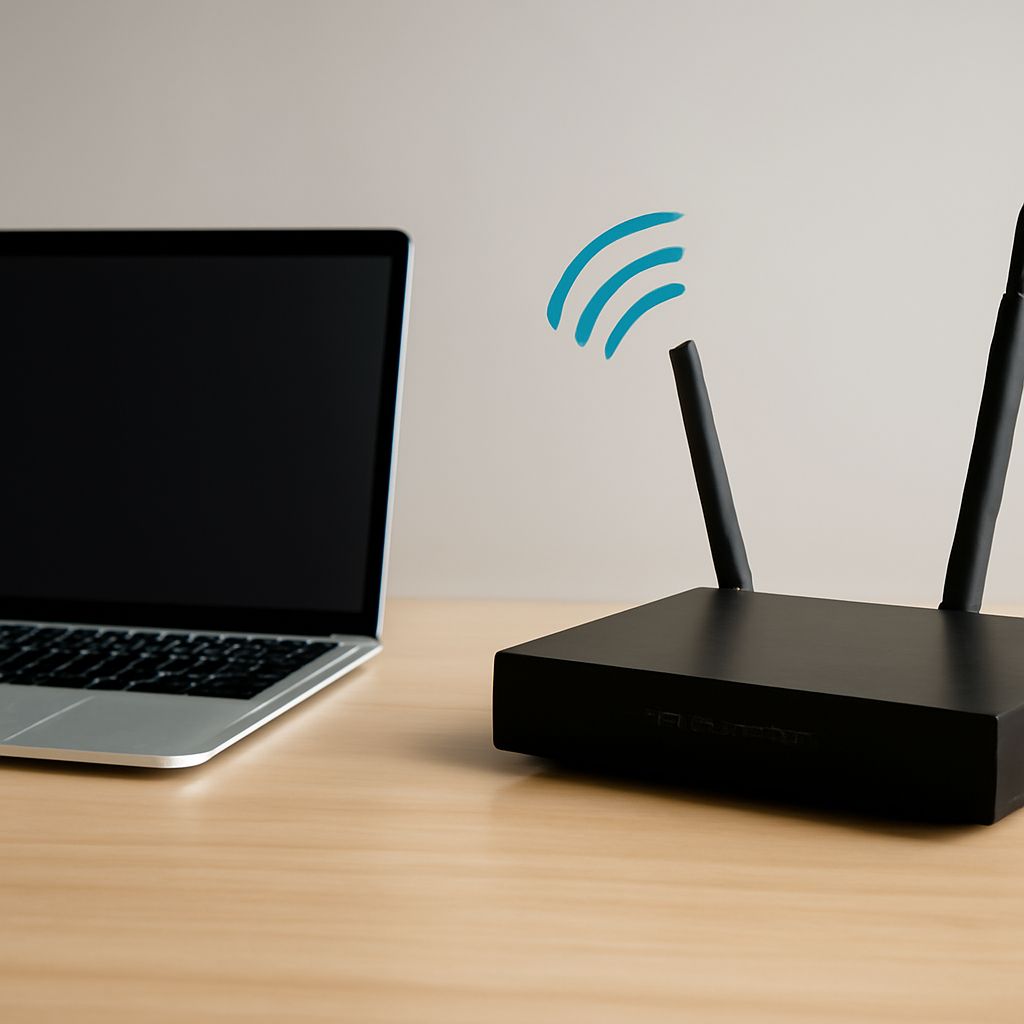
Prove reception at 6 to 10 feet before buying antenna mast pipe or planning a tall structure. Match the antenna to the local real RF channels, test it with a short coax run, and let measured reception—not antenna weight alone—determine the support.
A DIY HDTV antenna can work well when its elements cover the required VHF and UHF bands. A low-height test also reveals whether more elevation will help before you take on wind loads, guy wires, anchors, and tower construction.
Choose local RF channels, build, and test a DIY HDTV antenna
Look up stations by real RF channel rather than virtual channel number. In North American installations, channels 2–6 are low VHF, 7–13 are high VHF, and 14–36 are UHF. A UHF-only bowtie will not reliably replace an antenna with a properly sized VHF element when a desired station broadcasts on channel 7 or 13.
- List the real channels you need and the approximate direction of each transmitter.
- Use a four-bay bowtie or similar compact design for UHF. For VHF, add a folded dipole sized for the target frequency; its total length starts near 468 divided by frequency in megahertz, expressed in feet.
- Connect the elements to a 300-ohm-to-75-ohm balun, then use RG-6 coax. Keep the elements insulated from the reflector and support frame.
For a first UHF prototype, make four identical bowtie pairs from stiff copper or aluminum wire, using published dimensions for your channel range. Keep each pair symmetrical and its feed gap consistent. Mount the antenna temporarily on a nonconductive pole 6–10 feet above ground, point its broadside toward the transmitters, scan for channels, and record picture dropouts at different times. A stable scan with margin for weather is the proof needed before increasing height.
Antenna mast pipe: match diameter and unsupported length to wind load
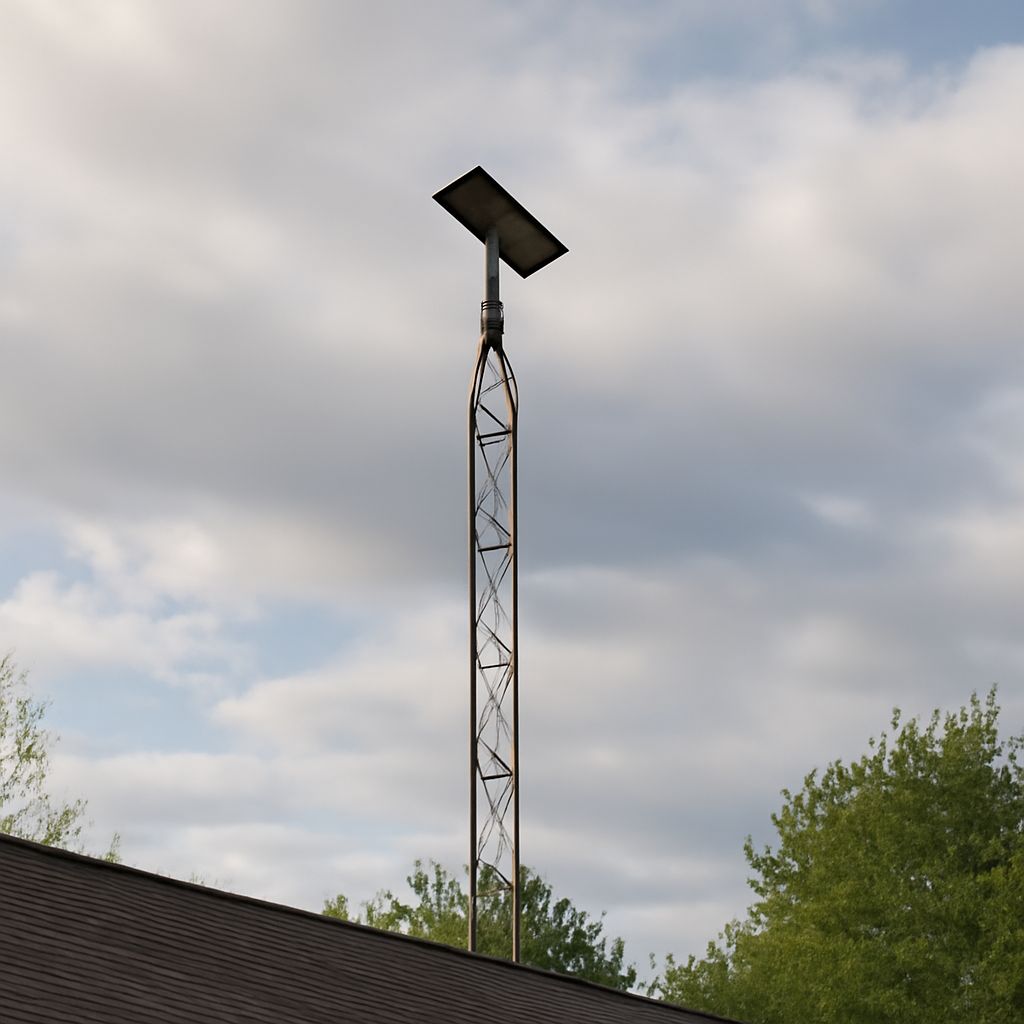
Size the mast for projected wind area and bending leverage, not the antenna’s listed weight. Wind force rises with exposed area and the square of wind speed; the bending moment also rises as the antenna sits farther above the highest mount. A large screen reflector can stress a pipe more than a heavier but compact antenna.
- Use galvanized steel mast pipe with a stated diameter, wall thickness, and maximum unsupported span. A light antenna may use 1.25- to 2-inch outside diameter pipe, but the manufacturer’s span and wind tables control.
- Keep an unguyed section short—often about 3–6 feet for a small antenna—and use two solid brackets attached to structural framing, not gutter or thin fascia.
- If the antenna, rotor, or extension creates a longer lever, increase pipe strength or add properly anchored guy wires. Include the mast, brackets, coax, and any ice or wind exposure in the load assessment.
Set the pipe plumb before tightening hardware. A slightly flexible mast may survive a calm-day test but move enough in gusts to cause reception failures.
When a DIY antenna tower is actually needed
A DIY antenna tower is justified only when the low-height test shows that elevation solves a real problem: terrain, a nearby ridge, buildings, or trees block the signal, and reception improves substantially at a temporary 20- to 40-foot test height. If the signal is already clean at 6–10 feet, a taller tower adds wind risk without improving the picture.
Use a purpose-designed, triangulated tower system with a rated base, sections, guy points, and anchors. Do not improvise a tower from ladder sections or thin water pipe. Keep every guy wire tight and inspect connections after severe weather. A short mast on a solid roof or wall mount is the safer choice when only a few extra feet are needed.
Aim, cable, manage coax strain, and verify reception
- Aim the antenna toward the weakest required station, then check the others. Rotate a directional antenna in small increments and rescan after each adjustment.
- Use the shortest practical RG-6 run. Avoid sharp bends, unnecessary splitters, and low-quality connectors. At UHF, cable and splitter loss can erase the gain from a taller support.
- Leave a drip loop below the outdoor connector, seal the connection with weatherproof tape, and fasten the coax to the mast with loose UV-resistant loops. Never let the connector carry the cable’s weight or let wind pull against it.
Verify several complete scans, signal quality, and dropouts during daytime and evening conditions. If reception fails only after adding cable, test with the short proof cable before installing an amplifier. If it fails only in wind, inspect mast movement, mount flex, and coax strain rather than changing the antenna design.