Choose CB if you want simple, license-free short-range communication for road travel, local coordination, or emergencies. Choose ham radio if you are willing to earn a license in exchange for more frequencies, higher power options, repeaters, and long-distance operating. The right CB radio parts matter more than cosmetic features when building an affordable station.
A cheap CB radio can perform well when paired with a properly mounted antenna, suitable coax, and a safe SWR reading. Compare the complete station—not just the radio price—before deciding between CB and ham radio.
The direct CB vs ham radio choice
CB is the better fit for immediate, uncomplicated communication. In the United States, CB users do not need an individual operator license, and common radios are easy to install in a vehicle or base station. Its 40 shared channels suit convoy communication, roadside updates, weather information, and casual local conversation.
Ham radio is the better choice for users who want technical control and broader communication options. An amateur radio license requires an examination, but it gives operators access to multiple bands and operating modes according to their license privileges. Ham equipment can support local repeater contacts, digital modes, portable operation, and long-distance communication.
Choose CB for low entry effort and familiar hardware. Choose ham when studying for a license and learning radio technique are worthwhile. Neither service guarantees a particular range: antenna height, terrain, interference, installation quality, and operating conditions are decisive.
How do licensing, frequencies, range, equipment, and operating style compare?
- Authorization: CB is generally available without an individual license, subject to applicable operating rules. Ham radio requires an amateur license and use within the privileges assigned to that license.
- Frequencies: CB operates on 40 channels around 27 MHz, including AM and, on compatible equipment, single-sideband operation. Ham operators may use several frequency bands, but the exact frequencies and modes depend on license privileges and band plans.
- Range: A properly installed CB commonly handles nearby vehicle-to-vehicle or local base contacts. Ham range can be similar at low power, much farther through repeaters or favorable propagation, and potentially worldwide on suitable bands and antennas.
- Equipment: A CB station needs a radio, power source, antenna system, coax, and a way to check tuning. Ham stations vary from handheld transceivers to complex base setups and may require additional antennas, power supplies, and accessories.
- Operating style: CB is built around shared channels and informal conversation. Ham radio emphasizes operator identification, technical experimentation, organized nets, emergency communication, and conversations on designated frequencies.
For either service, a higher-priced transceiver cannot compensate for a poor antenna or excessive feed-line loss. That is why the complete installation is the useful comparison.
Which CB radio parts does a budget station need—radio, power, antenna, mount, coax, and SWR tools?
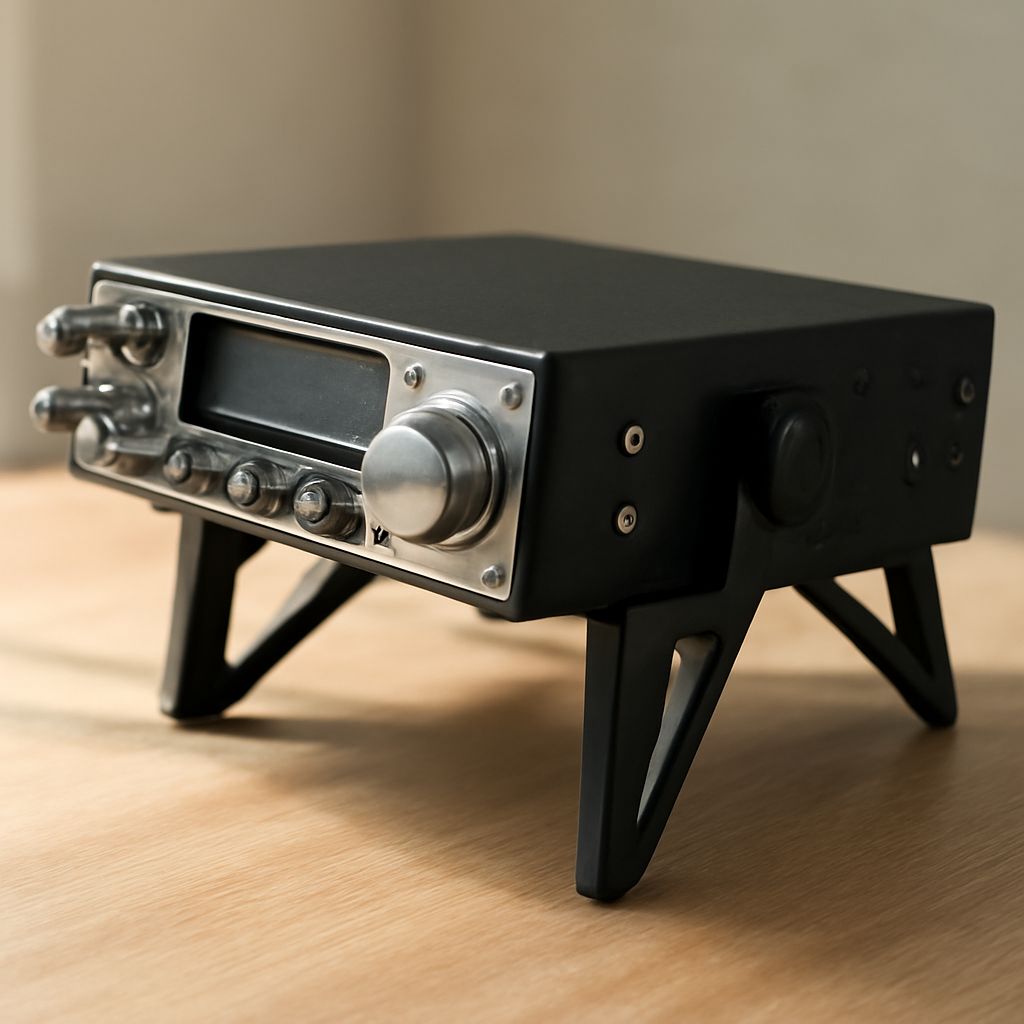
- CB radio: Select a legal 40-channel unit with a clear microphone, readable controls, and the mode you need. SSB can improve usable range and voice quality when both operators have compatible radios.
- Power connection: A mobile installation normally uses the vehicle’s 12-volt battery through the radio’s fused power lead. A base station needs a regulated 12- to 13.8-volt supply sized for the radio. Keep the positive lead fused near the battery.
- Antenna: This converts the transmitter’s electrical signal into radio waves and receives incoming signals. A quarter-wave CB antenna is roughly 8 feet long, so shortened mobile antennas use loading coils to fit practical vehicles.
- Mount: Use a magnetic mount for temporary vehicle use, or a hood, fender, mirror, trunk, or fixed mast mount for a more permanent installation. The mount should be mechanically secure and provide a suitable ground or counterpoise.
- Coaxial cable: Coax carries radio-frequency energy between the radio and antenna. Use a suitable 50-ohm cable with properly fitted connectors, keep the run as short as practical, and avoid sharp bends, crushed sections, and water intrusion.
- SWR meter or antenna analyzer: This checks whether the antenna system is accepting power efficiently. An inline SWR meter needs short jumper cables; an analyzer can simplify antenna adjustment but costs more.
Also allow for a microphone, fuse, connector protection, and a solid ground path. A radio may include the microphone and power lead, but the antenna, mount, coax, and tuning tools are often separate purchases.
Where can a cheap CB radio save money, and how do you assemble and test it?
Save money on display features, decorative trim, oversized speakers, and advanced controls you will not use. A basic radio from a reputable manufacturer is sufficient for many drivers. Do not economize on the antenna mount, damaged or excessively long coax, or the tools needed to verify SWR.
- Mount the antenna where it has the clearest exposure and as much metal ground plane as the vehicle allows. Keep it away from roof racks, cargo, and nearby wiring.
- Route the coax without pinching it in doors or tightly coiling excess cable. Connect the radio, microphone, fused power lead, and antenna firmly.
- Insert the SWR meter between the radio and coax using the meter’s marked transmitter and antenna connections. Check on a clear channel at low transmit time.
- Measure on a lower and higher channel. If SWR rises sharply toward one end, adjust the antenna according to its instructions, then repeat the readings.
- A lower, balanced reading across the operating channels indicates a healthier installation. Stop transmitting and correct the antenna, connector, ground, or coax if SWR is high or unstable.