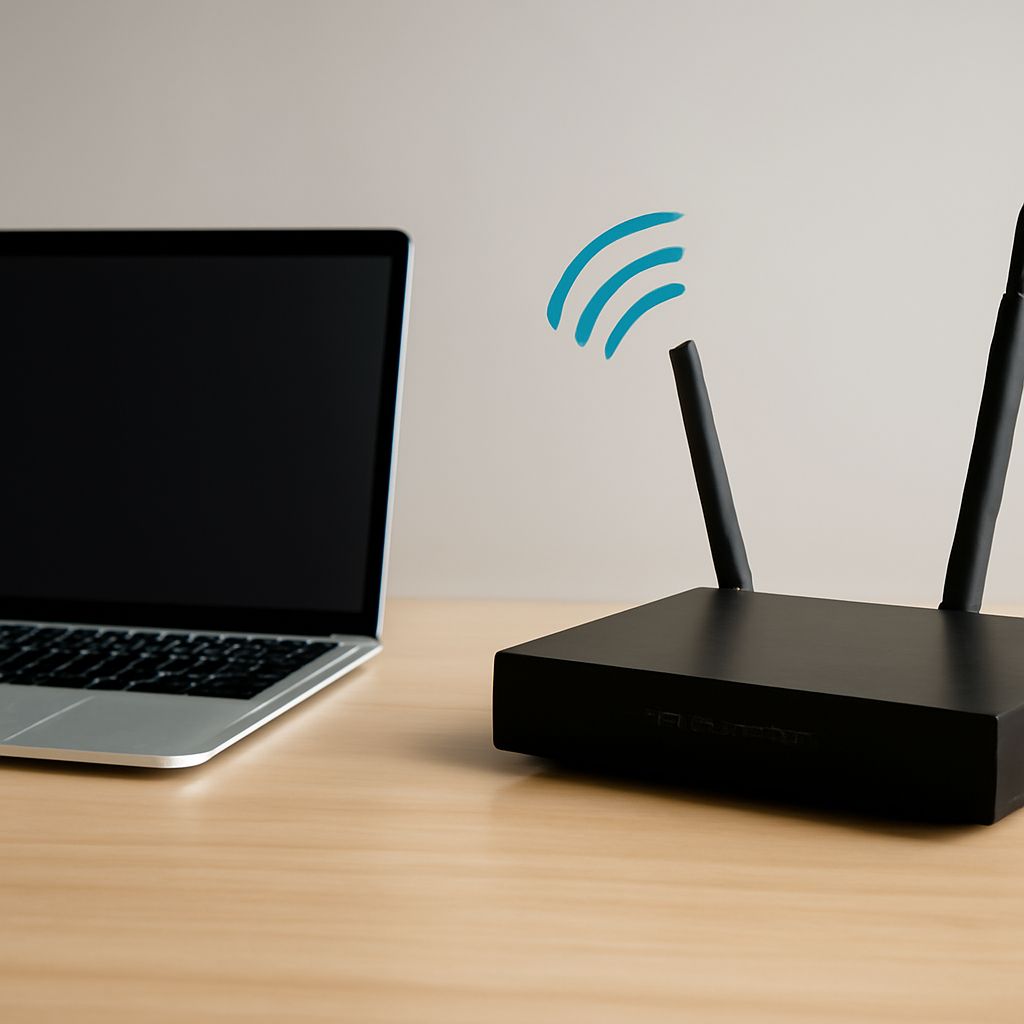
ATSC vs QAM is primarily a source-and-tuner question, not an antenna question. ATSC normally arrives from an over-the-air broadcast station through an antenna, while QAM usually arrives through a cable provider’s coaxial network. The television must support the matching tuner mode, and the antenna must cover the broadcast channel’s RF band.
UHF and VHF antennas receive radio-frequency signals; they do not convert QAM cable service into ATSC or change one television format into another. A duplexer or combiner only manages compatible RF paths, such as combining separate UHF and VHF antenna feeds.
ATSC vs QAM: How do source, modulation, and tuner support differ?
ATSC is a family of digital television broadcast standards used primarily for terrestrial stations. ATSC 1.0 uses 8VSB modulation, while ATSC 3.0 uses a different transmission design. In either case, the source is normally a local broadcast received through an antenna.
QAM, or quadrature amplitude modulation, is commonly used to carry digital television through a cable operator’s coaxial distribution system. A cable tuner may receive unencrypted “clear QAM” channels, but many cable services require a provider-supplied box, CableCARD, or other authorized equipment. A cable box may then send video to the television through HDMI rather than leaving the TV to tune QAM directly.
Keep these four terms separate:
- Service source: antenna broadcast, cable coax, satellite receiver, or a set-top box.
- Transmission standard or modulation: ATSC for broadcast television or QAM for many cable RF channels.
- Tuner support: the TV must have an ATSC tuner for antenna service and a compatible QAM/cable tuner for direct cable RF service.
- RF channel band: the actual frequency range, such as VHF or UHF, used by the signal.
A television’s virtual channel number does not necessarily identify its RF band. A station displayed as channel 5 may transmit on a different physical RF channel. Check the TV specifications and the station’s physical channel before selecting an antenna.
How do UHF and VHF bands shape antenna coverage?
In North American broadcast television, low VHF generally covers physical channels 2 through 6, high VHF covers channels 7 through 13, and UHF begins at channel 14. Exact assignments vary by market, and a station’s displayed number can differ from its physical RF channel.
VHF wavelengths are longer, so VHF antenna elements are larger. UHF wavelengths are shorter, allowing compact antenna designs, but UHF signals can be more affected by building materials, terrain, and obstructions at a given installation. Neither band is automatically “stronger”; reception depends on distance, transmit power, height, obstacles, multipath, and antenna performance.
Antenna gain describes how strongly an antenna favors certain directions or frequencies. It is not the same as universal coverage. A directional antenna can provide more usable signal from a station cluster in front of it while reducing signals from behind. A broad-band antenna may cover both VHF and UHF with less specialized performance in either band.
How should you choose UHF antennas for ATSC channels?
Choose UHF antennas when the desired ATSC stations transmit on UHF physical channels and the antenna’s specifications cover those frequencies. Start with a reception report or station list that shows physical RF channels, not only virtual channel numbers. If any important station is on VHF, a UHF-only model is incomplete even if most local stations are UHF.
Compare antennas using the same practical criteria:
- Band coverage: confirm UHF range and check whether high-VHF or low-VHF coverage is also required.
- Gain and direction: use higher directional gain for distant stations or a difficult path, but avoid a narrow pattern if stations surround the home.
- Installation position: outdoor height and a clear view usually outperform an indoor location behind walls or low-e glass.
- Signal distribution: long coax runs and multiple TV outlets create loss. A low-noise preamplifier may help a weak received signal, but it cannot restore a channel that the antenna never captured.
The antenna feeds an ATSC-capable antenna input. It does not need to “support QAM,” because QAM cable service follows a different source path. If the TV has separate antenna and cable inputs or source settings, select the antenna mode for the antenna feed.
When does a UHF duplexer or combiner belong in the signal path?
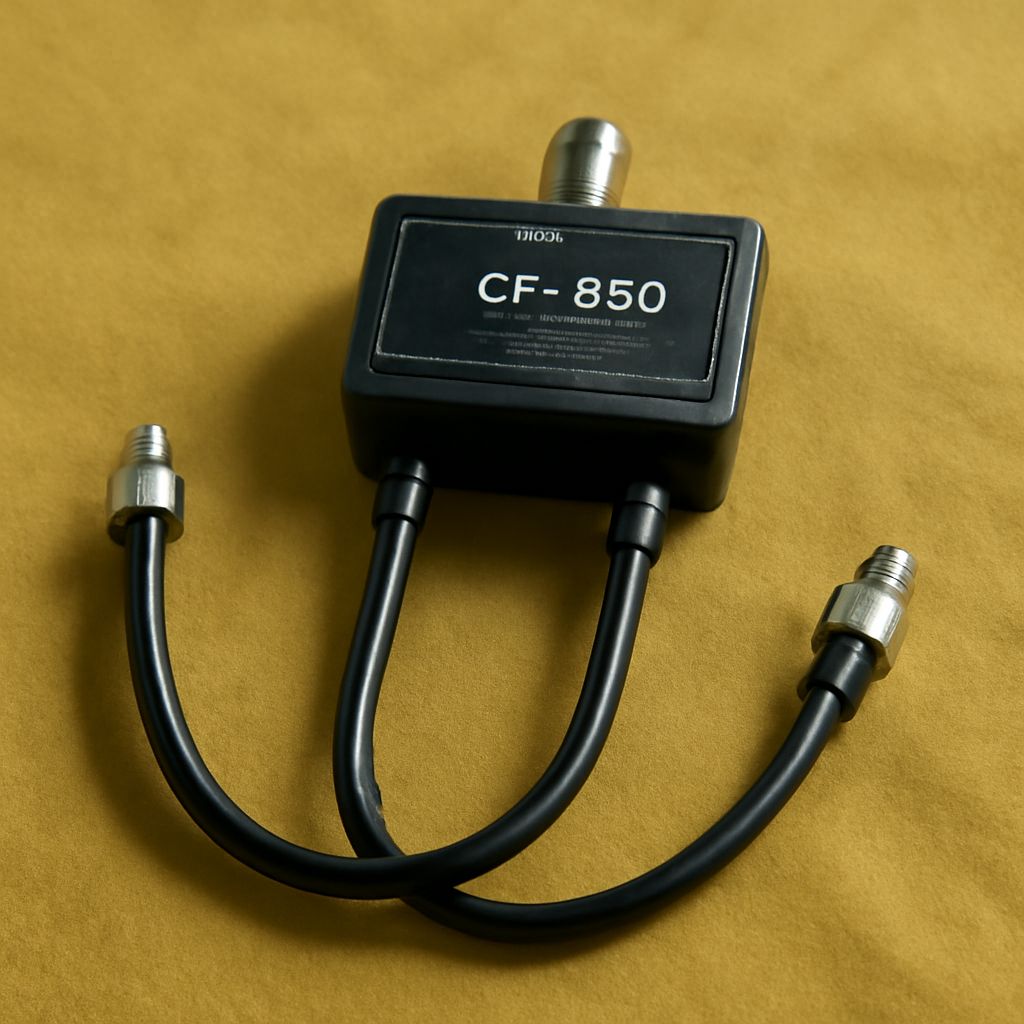
A UHF duplexer is a frequency-selective device with separate ports for defined bands and a common port. In a television receiving system, a UHF/VHF diplexer or combiner can join a UHF antenna feed and a VHF antenna feed onto one coaxial cable:
- Connect the VHF antenna to the VHF port.
- Connect the UHF antenna to the UHF port.
- Connect the common port to the coaxial cable leading to the ATSC tuner.
Inside the device, filters pass the intended band, reject much of the unwanted band, and provide isolation between the two antenna paths. That isolation helps prevent one antenna and its cable from loading or interfering with the other. Port directionality also matters: a device marked with separate band ports and a common port should be wired as specified, although many passive units can operate in reverse when their frequency ranges and loss are suitable.
Use a regular splitter or broadband combiner when combining two compatible UHF antennas, unless a purpose-built filtered design is required. A UHF/VHF duplexer is not a format converter, tuner, amplifier, or cable decoder. It cannot turn a QAM cable feed into ATSC, and it cannot make an ATSC antenna signal acceptable to a QAM-only cable input.
The correct paths are therefore straightforward: antenna to any needed band combiner, then coax to an ATSC tuner; or cable-provider coax directly to a compatible QAM tuner or provider device. Keep those source paths separate unless the equipment documentation specifically supports the intended RF arrangement.