When did digital TV start? In the United States, regular over-the-air digital broadcasts began on November 1, 1998. The decisive replacement date was June 12, 2009, when full-power stations ended analog transmission nationwide. That is the date most viewers mean by the U.S. digital TV transition.
The change did not require every television to be replaced. A newer TV with a built-in digital tuner could receive broadcasts directly. An older analog set needed a digital converter box, while cable and satellite subscribers generally used equipment supplied by their service provider.
When did digital TV start? A U.S. and regional timeline
United States: February 17 versus June 12, 2009
The original U.S. deadline was February 17, 2009. Congress extended it to June 12 after concerns that some households were not ready, but February 17 still mattered: some stations voluntarily ended analog broadcasts on that date. Hawaii completed its full-power transition earlier, on January 15, 2009, and individual stations could have market-specific schedules.
On June 12, full-power commercial and public television stations in the 50 states and Washington, D.C., completed the main analog shutdown. The deadline did not apply identically to every service. Low-power stations, translators, and some Class A stations had different requirements and could continue analog broadcasts beyond the full-power cutoff.
Canada and Mexico: 2011 and 2015 transition milestones
Canada ended analog over-the-air service in designated mandatory markets on August 31, 2011. The change was not a single nationwide shutdown for every transmitter. Mexico used a phased transition that began in 2013 and reached its principal final analog shutdown milestone on December 31, 2015.
What changed for analog television sets?
What an analog set could no longer decode
An analog television could not interpret the digital data used for the new broadcast picture and sound. After the local analog signal ended, an antenna connected directly to that set produced no usable program, usually showing a blank screen, static, or a “no signal” message. The set itself might still work perfectly; its tuner was simply using the wrong broadcast standard.
Viewers using cable or satellite were usually unaffected at the antenna-to-TV level because the provider’s receiver converted the service into a signal the television could display. The over-the-air solution was either a TV with an ATSC digital tuner or a converter box.
What antenna viewers needed after the cutoff
An antenna household with an analog TV needed three things: an existing VHF/UHF antenna in suitable condition, a compatible digital converter box, and the correct connection cable. The transition did not create a special requirement for a “digital antenna.” Reception still depended on antenna placement, distance from transmitters, terrain, and whether local stations used VHF or UHF frequencies.
How did digital TV converter boxes work with older sets?
Inputs, outputs, tuning, and channel scans
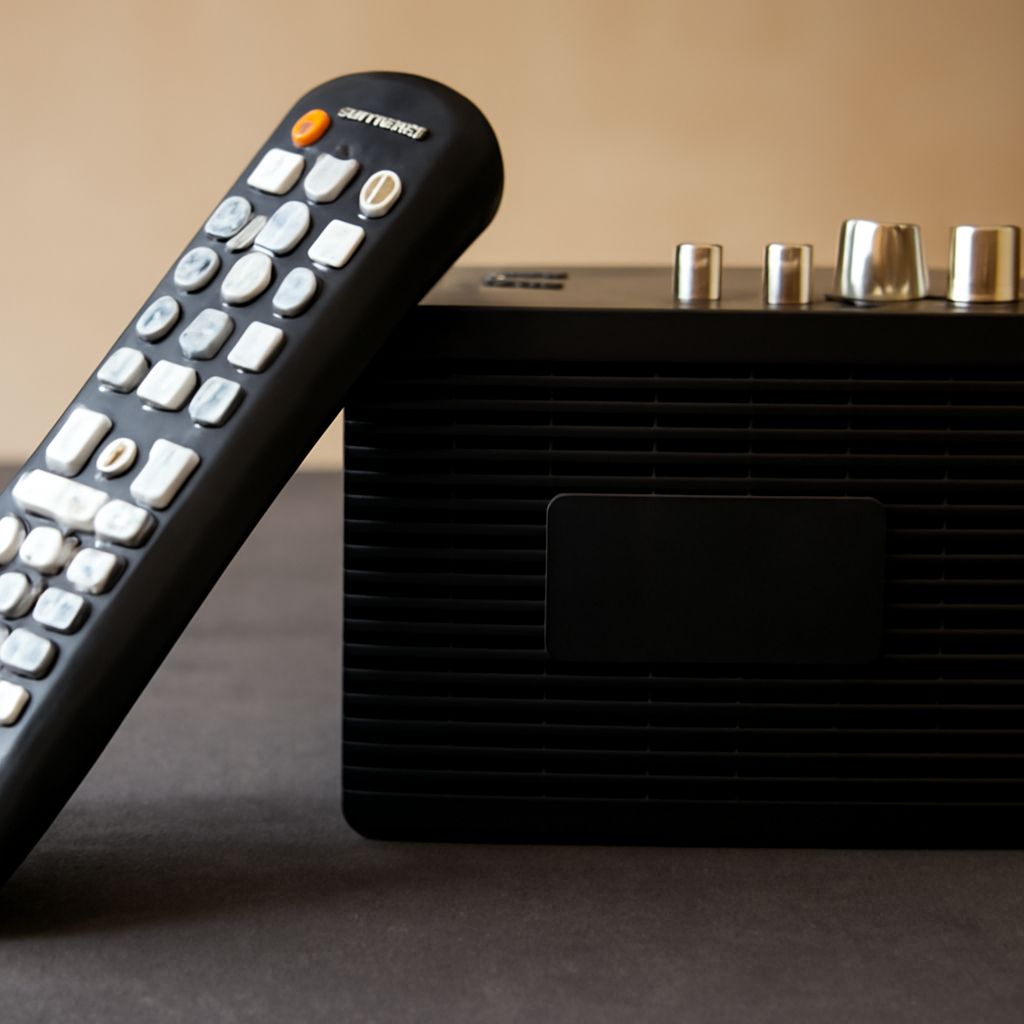
A converter box received the station’s digital signal through a coaxial antenna input. It decoded the ATSC broadcast and converted the result into an analog output for the older television. Common outputs included composite RCA cables and a coaxial radio-frequency output set to channel 3 or 4. With the RF connection, the television stayed on channel 3 or 4 while the box handled channel selection.
Setup normally involved connecting the antenna to the box, connecting the box to the TV, selecting the correct TV input or channel 3/4, and running an automatic channel scan. The scan stored available digital stations and their subchannels. Changing channels afterward used the converter’s remote, not the analog TV’s tuner. A box could not improve a weak antenna signal, and a station absent from the scan usually required antenna repositioning or a reception check.
Former $40 coupon assistance: eligibility and end date
The federal TV Converter Box Coupon Program helped U.S. households buy eligible equipment during the transition. A household could request up to two coupons worth $40 each, subject to the program’s funding and application rules. A coupon generally reduced the price of an approved box; it was not a permanent benefit or a guarantee that every model would cost nothing.
The program ended on July 31, 2009, and its coupons expired under the program’s stated terms. A free digital TV converter box may have been available when a retailer’s approved model cost no more than the coupon value, but the former federal assistance program is not an open source of free equipment today.
Digital TV channel frequencies: virtual channels versus physical RF channels
Why the displayed channel may not match the RF channel
A digital station has a physical RF channel and a displayed virtual channel. The RF channel identifies the six-megahertz broadcast allocation used by the transmitter. The virtual channel, delivered through PSIP data, is the number and decimal subchannel viewers see in the guide or on screen. Stations use virtual channels to preserve familiar branding after changing frequencies.
Example: a station can display 5.1 while broadcasting on RF 32
A station might appear as 5.1 on the television but transmit on physical RF channel 32. In the U.S. frequency plan, RF channel 32 occupies approximately 578 to 584 MHz, with a center frequency near 581 MHz. The “5” in 5.1 is not a five-megahertz measurement and does not prove that the signal is on RF channel 5. The “.1” identifies the station’s primary program stream; .2 or .3 may identify additional subchannels.
For practical tuning, use the antenna input and run a channel scan. The TV or converter stores the virtual channel, while its tuner locks onto the station’s actual RF frequency.