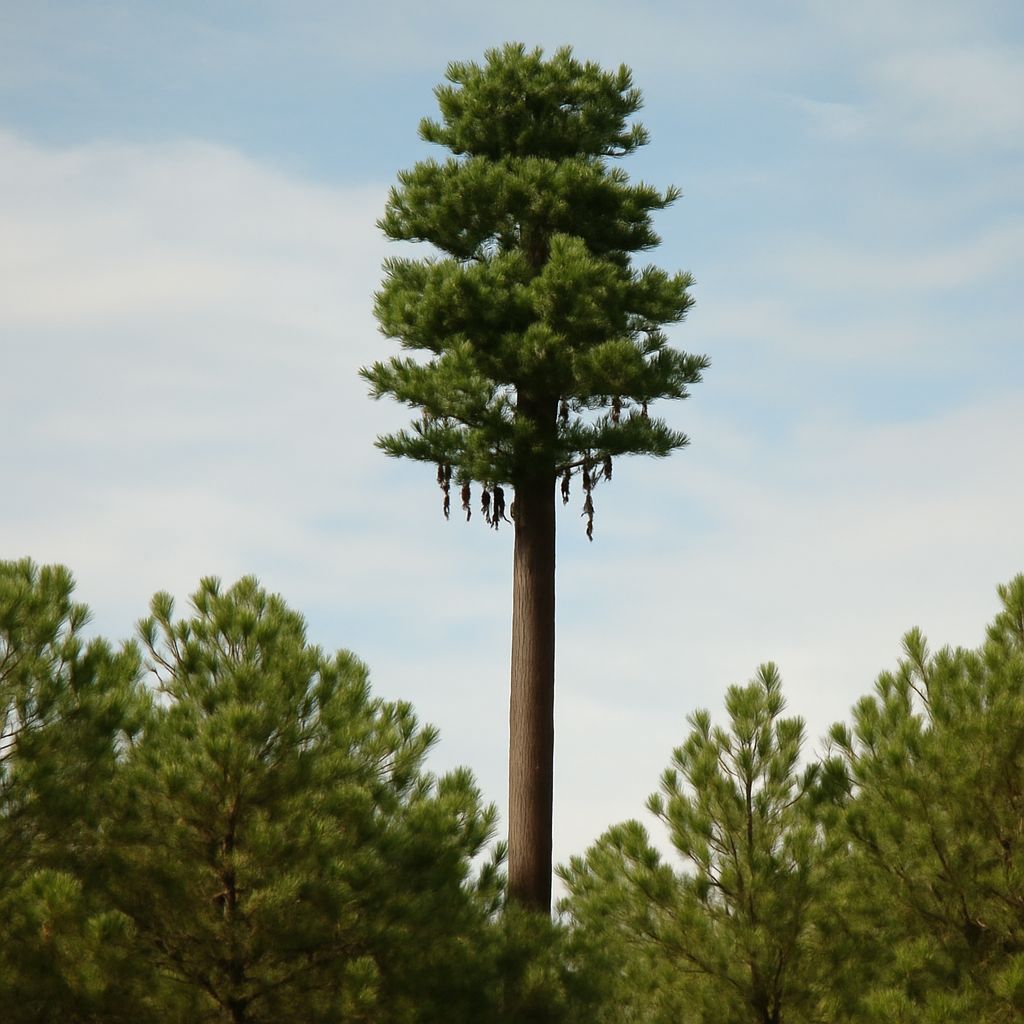
A portable cell tower provides temporary wireless coverage or capacity, usually from a trailer, truck, or rapidly assembled mast. A conventional site uses a permanent monopole, lattice tower, rooftop installation, or other fixed structure. A palm tree cell tower is also permanent or semi-permanent, but disguises its antennas and support equipment as landscaping.
The key differences are purpose, structure, operating duration, capacity, and backhaul. Portable sites address short-term demand, disguised sites reduce visual impact, and conventional sites support long-term network coverage. Companies such as American Tower, Crown Castle, and SBA Communications may own passive infrastructure, but mobile carriers, contractors, and equipment vendors perform different jobs in bringing each site online.
Portable Cell Tower: How Does It Differ From a Conventional Site?
A portable site is commonly called a cell on wheels, or COW. It may include a telescoping mast, antennas, radios, batteries, a generator, and transmission equipment mounted on a trailer. Crews can position it near a stadium, disaster area, road closure, festival, or overloaded neighborhood, then remove it when demand returns to normal.
Its operating period can range from several hours to many months. Capacity varies with the number of radios, spectrum bands, antennas, and available backhaul. A large deployment can handle substantial event traffic, but it generally has less height, power, and permanent equipment space than a mature macro site.
Conventional sites are engineered for long-term service. A monopole or lattice tower can support antennas for multiple carriers at different elevations, with permanent electrical service, cabinets, fencing, and fiber or microwave transport. It usually offers broader coverage and a more stable upgrade path, although a fixed site takes longer to permit, construct, and modify.
- Portable: fast deployment, temporary coverage, variable capacity, and trailer-based power and transport.
- Conventional: permanent structure, predictable coverage, multi-carrier equipment, and infrastructure designed for expansion.
How Does a Palm Tree Cell Tower Conceal Its Antennas?
A palm tree cell tower uses a faux trunk, artificial fronds, or both to hide antennas, cables, and sometimes remote radio units. The antennas remain elevated and arranged to create the required radio-frequency coverage, while the exterior is shaped and colored to blend with nearby trees.
The disguise changes appearance, not the basic network function. A stealth site may use a monopole, rooftop structure, or other support inside the concealment. Its capacity can approach that of a conventional site when height, equipment space, power, and backhaul are sufficient, but the enclosure and visual design can limit antenna placement, maintenance access, or future expansion.
Unlike a portable deployment, a disguised site is normally installed for long-term coverage in locations where a visible tower would face planning, neighborhood, or aesthetic objections. It still requires a site lease, power, transport, radio equipment, and ongoing maintenance.
Which Cell Tower Companies Build, Own, and Operate Sites?
The phrase cell tower companies often refers to tower owners, but several businesses can participate in one deployment:
- Tower owners: American Tower, Crown Castle, and SBA Communications are examples of infrastructure companies that may own towers, rooftops, small-cell assets, fiber, or related site infrastructure. They lease space to one or more carriers and manage the passive structure.
- Mobile carriers: Verizon, AT&T, and T-Mobile select coverage objectives, supply or control network specifications, operate the radio network, and serve subscribers. A carrier may own some sites directly or lease space from a tower company.
- Construction contractors: Firms such as MasTec and Dycom Industries can handle engineering, foundations, tower erection, antenna installation, electrical work, and site integration under contract. They build or modify assets without necessarily owning them.
- Equipment suppliers: Ericsson, Nokia, and Samsung provide radios, antennas, baseband equipment, software, and related network hardware. Supplying equipment does not make them the site owner or carrier.
For a portable site, a carrier may rent the trailer and radio package from a specialist provider, while a contractor transports, sets up, fuels, and removes it. The ownership arrangement therefore depends on the contract rather than the tower’s appearance.
How Do Portable, Stealth, and Conventional Sites Reach the Network?
All three site types follow the same basic radio path: the handset communicates with antennas, the radio equipment processes the signal, and a transport connection carries traffic toward the carrier’s core network. From there, authentication, internet access, voice services, and other applications are handled by the carrier.
- Portable sites: use leased fiber where available, a temporary microwave link, or satellite transport when rapid deployment or damaged infrastructure makes fiber impractical. Generators and batteries can keep the site running during an outage.
- Palm-tree sites: commonly use buried or overhead fiber, licensed microwave, or a nearby small-cell aggregation point. The concealment affects the structure, not the choice of network backhaul.
- Conventional sites: typically use permanent fiber or microwave backhaul, commercial power, battery backup, and fixed connections to an aggregation hub or core-network facility.
A site can also operate as a neutral-host installation, with shared passive infrastructure and separate carrier radios or transport connections. That arrangement explains why the visible tower, the radios, and the service reaching a phone may belong to different companies.